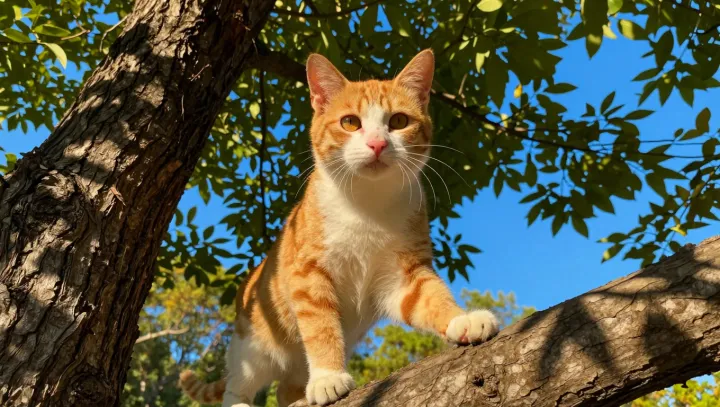
Bad solar panel. An orange cat's coat may absorb incoming solar radiation, yet its fur shaft matrix and trapped air slow heat transfer toward the skin by lowering effective thermal conductivity. The reversal matters. When temperatures fall, the same air pockets impede the outward movement of metabolic heat.
The clever part is not color; it is spacing. Each hair creates a small boundary layer, while the coat's loft reduces convective exchange and turns a bright animal into a thermal firewall, a cyber analogy grounded in insulation physics. No magic involved. Flattened or wet fur loses trapped air, raises heat flow, and leaves skin more exposed to sun or cold.
That distinction kills the lazy visual inference. Orange pigment affects radiation absorbed at the surface, but it does not make the animal a generator; net heating also depends on airflow, coat density, skin temperature, and exposure time. Biology keeps the books. Fur buys the body time to regulate blood flow and behavior before heat becomes a burden, a passive design lesson for materials that manage energy before electronics awaken.