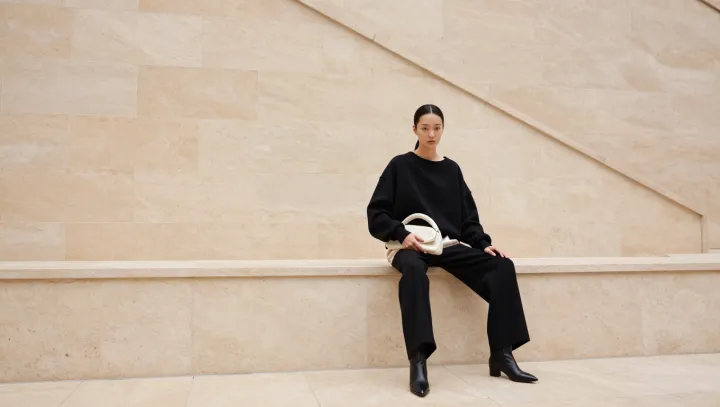
Shadow earns more trust than decoration. A pale wall, a dark coat, and the clean interval between them show why monochrome dress refuses retirement: the eye reads mass before it reads ornament. In visual perception, figure-ground separation sorts subject from surround, while contrast makes edges legible at a glance. The silhouette arrives first. Everything else follows. No color story rescues that instant; the shape has already delivered its verdict.
Fashion often misreads restraint as weakness. Yet black and white can be merciless, because a bad hem, swollen shoulder, or crowded seam has nowhere to hide. Proportion governs the deal: length against width, sleeve against torso, shoe against trouser break. Negative space performs equal labor, giving the body pauses that prevent visual noise. Designers call this visual hierarchy; stylists recognize it as line management. A bright print can distribute attention across flaws; monochrome concentrates it. Neither term is romantic. Both explain why a spare outfit can look composed rather than merely plain.
That discipline is the real luxury. Color can entertain; silhouette must persuade. When cut, spacing, and contrast agree, monochrome clothing becomes less a uniform than an argument made in profile. It asks more of tailoring, and gives back a presence that does not need ornament to announce itself. It is a severe bargain, which is precisely why it remains persuasive. The lasting image is not the fabric's absence of hue, but the room it leaves for the wearer to occupy.