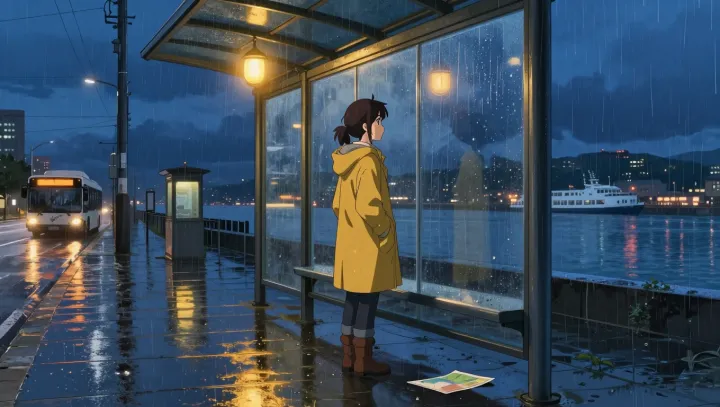
The prettier lie is that rain makes its own light. Not water, but the city above it, supplies the glow. At street level, wet pavement seems to shine; yet it emits nothing. What changes is the surface: a thin film fills pits and softens grit, allowing streetlamps, windows, and signals to return as specular reflection rather than break apart in dull scatter.
That distinction matters, because a dry road is optically unruly: its microfacets tilt in competing directions and disperse an image. No magic occurs. When rain levels those tiny angles, a smoother interface preserves the geometry of incoming light; at shallow viewing angles, Fresnel reflectance directs more of it toward the eye. The effect becomes plain after dusk, when bright points meet dark ground and the eye reads their duplicated paths as depth.
The city owns the scene, not the storm. A red signal appears red in a puddle because it is red above it, while a dark block remains dark unless some lamp strikes it at a useful angle. Perspective decides the rest. Low viewpoints lengthen reflected strips, and traffic or ripples fracture them again. Rain lowers surface roughness enough for urban light to organize itself beneath our feet. In the black sheet underfoot, the city sees its borrowed face.