The horse has an unforgiving stomach. Unlike most mammals, it almost never vomits: a powerful lower esophageal sphincter, reinforced by the angle at which the esophagus enters the stomach, resists the backward passage of food. That is a costly constraint for an animal whose digestive tract can run into trouble.
The design rewards steady grazing. Horses evolved to eat small amounts of fibrous forage over long stretches, while microbes in the hindgut ferment plant material that escapes digestion earlier in the tract. Their stomachs are relatively small. When feed, fluid or gas accumulates because of an obstruction or other illness, pressure can build without the relief that vomiting might provide. Severe stomach distension can lead to rupture, an often fatal emergency. Vomiting is exceptionally rare rather than impossible, but its occurrence may signal a serious problem.
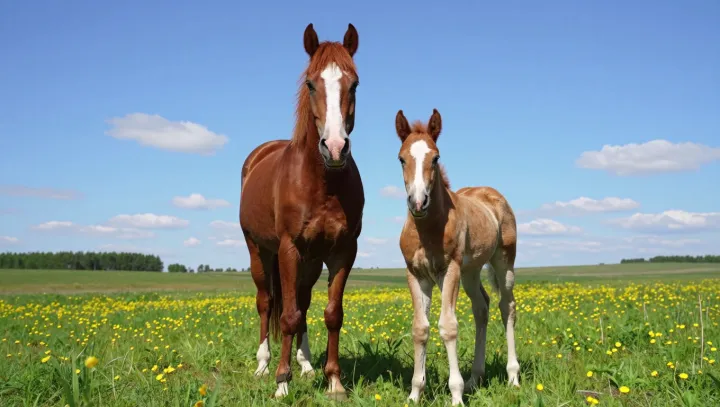
A foal inherits this digestive vulnerability even as it displays another striking adaptation: it can usually stand and walk within hours of birth. That mobility helps a newborn keep up with its mother and the herd, where social bonds matter to grazing horses. Trouble demands quick attention. Signs of colic, such as repeated rolling, pawing or looking at the flank, warrant prompt veterinary advice; a veterinarian may pass a tube through the nose into the stomach to release accumulated fluid and gas. The foal finds its legs early, but carries the same hidden constraint as the adults beside it.