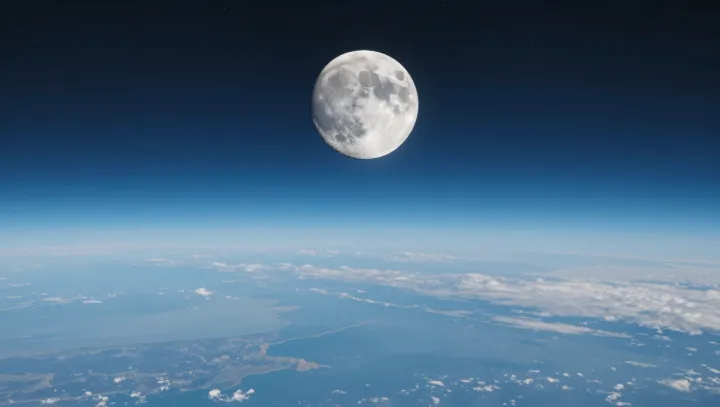
The far-side tide is no contradiction: the Moon raises water on both sides of Earth because its gravitational pull is uneven. The distinction matters. Gravity pulls more strongly on the near side than on Earth's center, and more strongly on the center than on the far side.
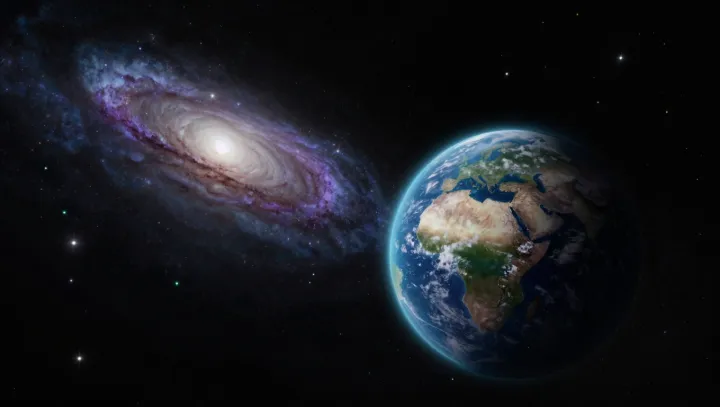
The familiar notion of the Moon simply pulling the ocean toward it tells only half the story. Earth and the Moon orbit their common center of mass, and Earth's center accelerates toward the Moon under its gravity. On the near side, where lunar gravity is stronger, water tends to move toward the Moon relative to Earth's center. On the far side, where lunar gravity is weaker, the ground and ocean fall toward the Moon less rapidly than the center does. Relative to that center, the far-side water is left behind. This difference is called differential gravity, and it produces the tidal force.
The two-bulge picture is an elegant guide, not a map of the actual ocean. As Earth rotates through the tidal pattern, many coasts experience two high tides and two low tides during a lunar day. Yet ocean depth, coastlines and the movement of water through basins alter their timing and height; some places have only one high tide each lunar day, while others have uneven pairs. The Sun also raises tides, reinforcing or counteracting the lunar effect as their relative positions change. Across the water, an unseen difference in pull becomes a visible line on shore.