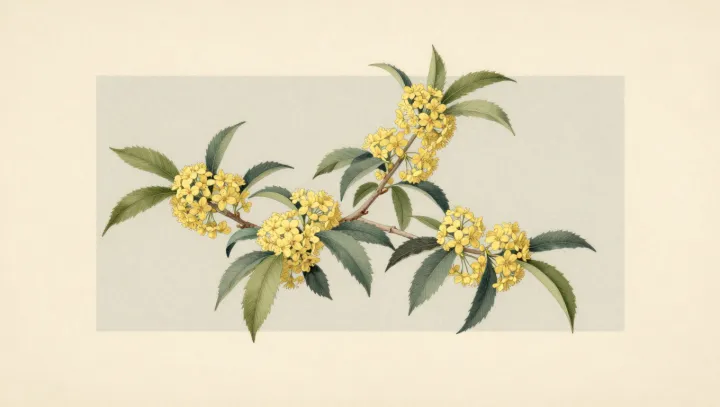
A cascade of pale yellow flowers can now bury a stone wall in petals, yet its ancestor was a wild Chinese climbing rose armed with hard thorns and small, sparse blooms. The transformation did not rely on modern breeding programs or gene editing pipelines, but on slow, cumulative selection across gardens and trade routes.
Botanists point to spontaneous mutation and polyploidy as the basic genetic engine. In a seedling population, a single sport with reduced prickles or altered hormone balance in the vascular cambium can change internode growth and prickle formation. When such a plant also carries alleles that upregulate volatile organic compound synthesis in the petals, the result is intensified fragrance pumped out through the plant’s own secondary metabolism, much like an overclocked processor driven by faster electron flow.
Once gardeners noticed longer clusters of flowers, fewer thorns and stronger scent, vegetative propagation turned these traits into a stable asset. Layering and cuttings bypassed meiosis and genetic recombination, locking advantageous mutations into a clonal line and preventing entropy from diluting them each generation. Repeated selection for flexible, fast‑extending canes created a natural wall‑covering architecture, while tolerance of pruning encouraged ever denser flowering surfaces, until the plant resembled a calibrated biological curtain of “yellow snowstorm” bloom.