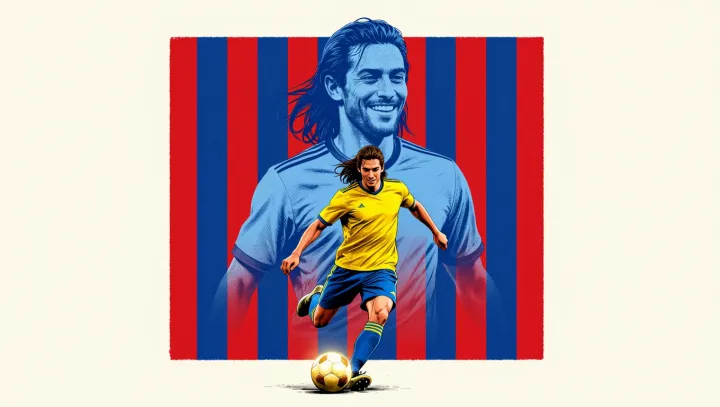
Ball control becomes a physics problem when Ronaldinho receives a pass. Instead of relying on raw sprint speed, his first touch pre‑loads the next action, shifting the ball into space where defenders cannot accelerate in time. This touch acts like an instant recalculation of vectors, changing the effective distance opponents must cover before they even react.
Underneath the highlight clips sit concrete mechanisms. Proprioception and reaction time let Ronaldinho adjust joint angles mid‑stride, turning body feints into controlled perturbations of a defender’s center of mass. Each hip fake forces a miniature loss of balance, a form of controlled entropy in the defensive structure that opens new passing lanes and dribbling corridors.
Angle manipulation then compounds these gains. By receiving at an oblique angle rather than head‑on, he shortens his own path to goal while extending the defender’s, exploiting basic kinematics and reducing the rival’s effective velocity. In economic terms, this is marginal effect applied to movement: modest anaerobic capacity, outsized positional return. The spectacle is flair; the engine is geometry and neuromuscular efficiency.