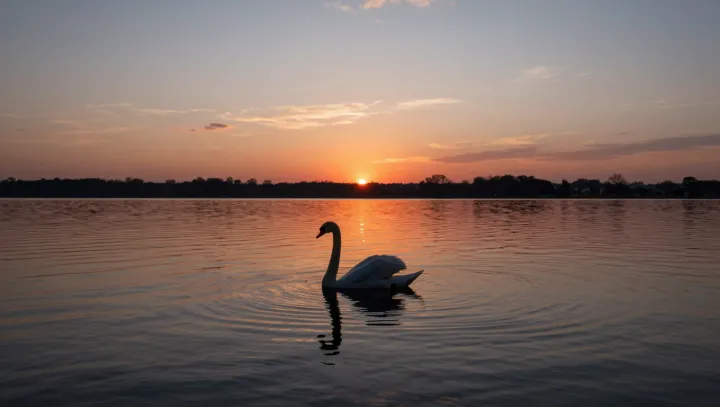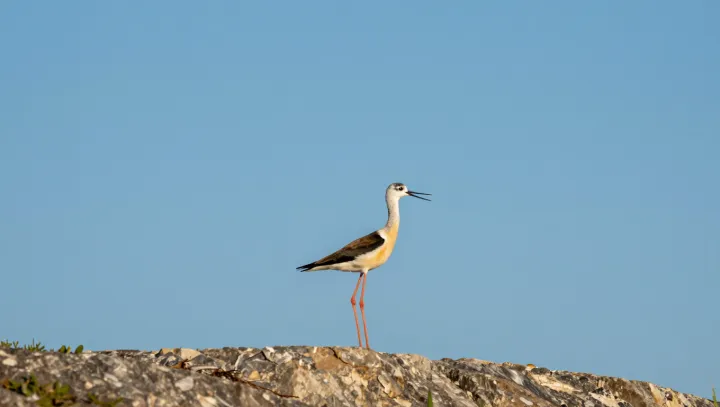
A heron frozen at the water’s edge is not resting but running a tight cost–benefit calculation. Remaining almost perfectly still lowers its basal metabolic rate while it waits for fish, frogs or insects to move within striking distance. In a habitat where failed lunges waste scarce calories, patience becomes a measurable survival asset.
The bird’s apparent immobility is an optical tactic as well as an energetic one. Many aquatic prey rely on motion detection and edge contrast; a static vertical form against reeds or rocks generates minimal visual signal in their retinas. By keeping body and legs locked and shifting only micro‑muscles in the neck, the heron stays below its prey’s detection threshold while continuously updating depth cues through stereoscopic vision.
When a target enters the optimal range, the strategy flips from conservation to controlled entropy increase. Elastic tendons in the neck release stored potential energy, turning the head and bill into a ballistic lever that cuts through water with reduced drag. This single rapid strike compresses extended waiting time into a brief, high‑precision event, converting low‑risk stillness into one of the most efficient hunting performances in vertebrate ecology.