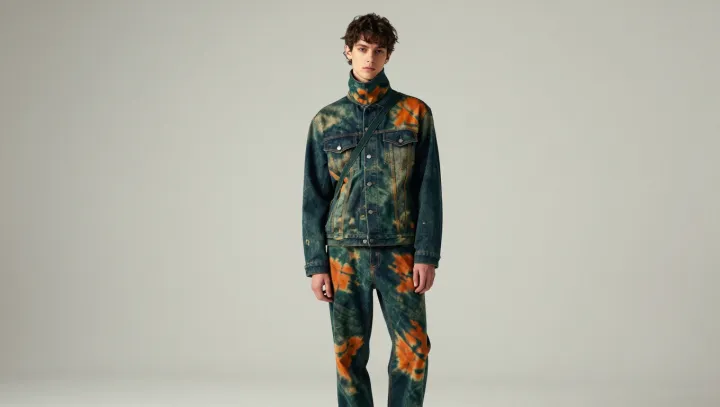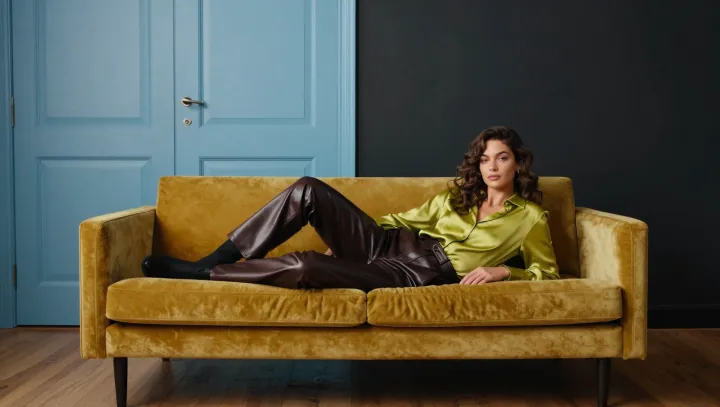
Yellow hits the eye like a spotlight, yet that same intensity can quietly stabilize an outfit. Vision processes luminance and chromaticity on partly separate neural channels, so the brain weighs brightness before it judges hue. A yellow piece often reads as “light source” more than “loud color,” which shifts how every other shade around it is perceived.
In opponent-process theory, yellow sits on the blue–yellow axis, but its typical high luminance means it behaves almost like built-in key light on the body. Place yellow near the face and it can flatten harsh value contrast, smoothing perceived shadows and softening edge detection along jawlines and cheekbones. Dark neutrals next to it appear deeper but less heavy because the visual system normalizes overall brightness through color constancy.
On the body, that plays out as subtle re-proportioning. A bright yellow top against darker pants pulls the luminance centroid upward, making the upper body feel visually lighter and more open. A yellow skirt or shoes push that centroid down, grounding the silhouette without adding actual mass. By exploiting luminance contrast and simultaneous contrast in one move, the so-called hardest color to style becomes a precision tool for balance.