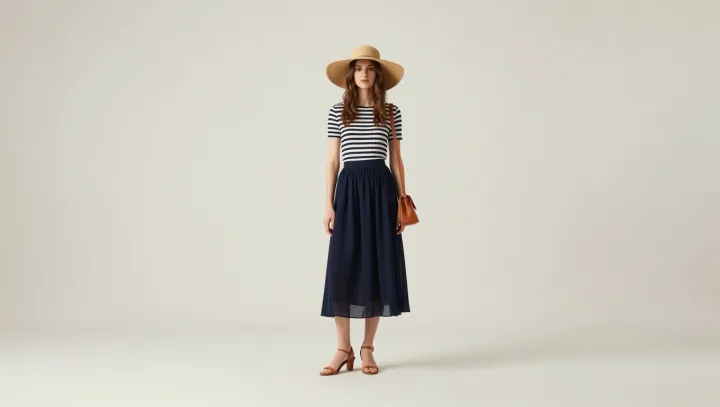
A long, loose outfit with only one or two colors can cool the body more than a short, tight, vivid look. The effect comes from physics, not fashion taste. Fabric acts as a mobile shade structure, cutting direct solar radiation and slowing heat transfer from the environment to the skin.
More fabric creates a thin boundary layer of air between cloth and skin. This air pocket supports convective heat loss and steady evaporation of sweat, two core mechanisms in human thermoregulation. When clothes are tight, that air layer collapses, sweat saturates fabric faster, and evaporation efficiency drops, even if more skin is exposed.
Color still matters, but not in the way fast fashion suggests. A restrained palette in light or medium tones reflects a portion of visible and infrared radiation while avoiding the heavy dyes and dense weaves often used in very saturated colors. Pairing looser weaves with breathable fibers such as cotton or linen reduces thermal conductivity and supports continuous moisture wicking, allowing the body to keep core temperature within a safe range even under intense sun.
The counterintuitive outcome is that a longer silhouette with fewer colors can operate like wearable climate control, while a short, tight, bright outfit may trap heat and hinder the body’s own cooling system.