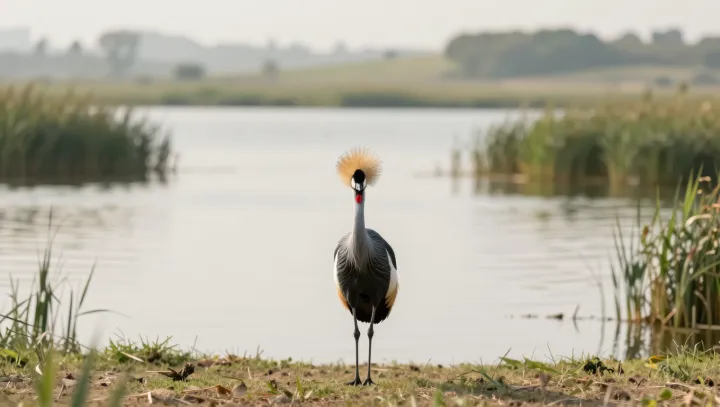
A single silhouette with a spray of golden feathers rises from African wetlands onto three different national emblems. The grey-crowned crane, usually seen stepping through shallow water in search of seeds and invertebrates, also stands rigid atop state coats of arms and currency designs across borders.
Biology does part of the work. The crane’s tall profile, elaborate crown of stiff feathers and slow, deliberate gait make it visually legible from a distance, a kind of high-contrast logo in a landscape of reeds and grass. Its reliance on floodplains, seasonal wetlands and agro-pastoral mosaics links it to fertile land and to the hydrological cycles that sustain local food systems, turning a bird into shorthand for agricultural productivity and ecological resilience.
Behavior adds another layer. Grey-crowned cranes form long-term pairs and perform synchronized courtship dances, which observers commonly read as a display of loyalty and social cohesion. In political iconography, those traits map neatly onto narratives of nation-building, collective discipline and continuity. The bird’s broad range across several neighboring states, and its presence in both rural folklore and modern conservation policy, then creates a shared symbolic resource that different governments can appropriate without appearing to copy one another, allowing one species to anchor three parallel stories of sovereignty.