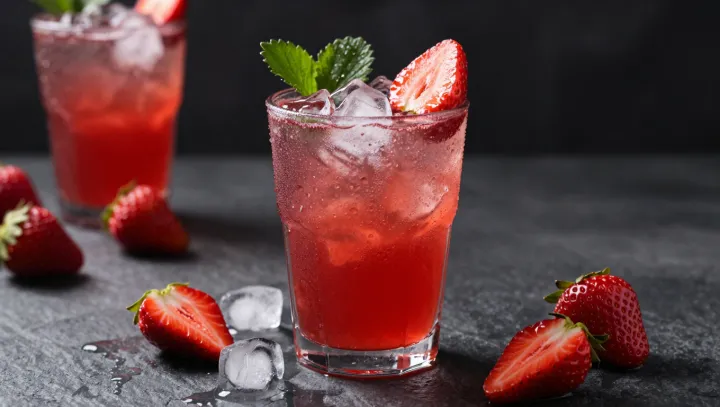
One bottle of a store‑bought strawberry drink can deliver close to the entire daily added sugar limit in a single serving. A homemade version built from frozen strawberries, water and a small spoon of sugar or honey can slash that load by more than half while still tasting recognizably sweet.
The difference comes down to formulation. Commercial drinks often rely on high‑fructose corn syrup, sucrose and concentrated juices, pushing total sugar content above twenty grams per serving. Blend real berries with water and you mainly get fructose packaged with fiber and organic acids, which slow gastric emptying and blunt the glycemic response. That means your blood glucose and insulin do not spike as sharply, even if your tongue still reads the drink as sweet.
Sweetness perception is not only about grams of sugar; it is also about volatile aroma compounds and viscosity. Strawberries supply esters and other flavor molecules that amplify sweetness signals at taste receptors and in neural circuits of the gustatory cortex. By keeping the berry content high and using only a modest amount of added sugar, a homemade drink can preserve the expected sensory profile while cutting a significant share of the added sugar that drives excess caloric intake.