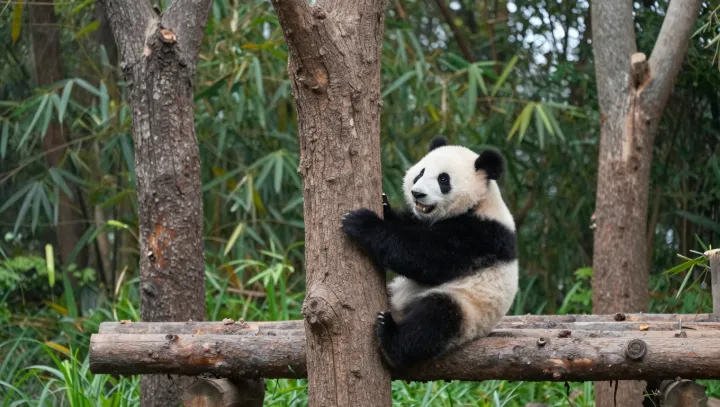
Cuteness sells, but it also misleads. The giant panda that looks like a monochrome plush toy is built on the chassis of a heavyweight carnivore, with a skull, spine and limb structure closer to a bear built for impact than to a bamboo ornament. Round face, soft gait, rolling posture; underneath that visual slapstick sits a jaw system that functions more like a hydraulic press than a herbivore’s mill, pairing a reinforced zygomatic arch with hypertrophied masseter muscles to crack bamboo that would snap lesser teeth.
Underestimation is the panda’s quiet advantage. Classified within Carnivora, it still carries the full software of a predator even if its diet looks like a salad bar, with canines, carnassial teeth and a digestive tract that, though inefficient with cellulose, can process meat and high protein when needed. Those clumsy-looking forelimbs anchor robust scapulae and a powerful deltoid crest, giving the animal the ability to haul its bulk up wet trunks and cling to rock faces that would defeat more gracile climbers, while semi-retractile claws provide grip more akin to a mountaineering tool than a plush paw.
The real twist is that this power stays mostly offstage. Field observations show individuals covering steep terrain at speeds that conflict sharply with their sleepy reputation, and in rare predatory events they dispatch small ungulates with a bite force estimated to rival far leaner carnivores. What the global audience sees is the marketing layer, the rolling and the yawning; what the forest knows is an animal that has turned comedic branding into a biological shield, hiding a serious set of hardware behind a permanent costume.