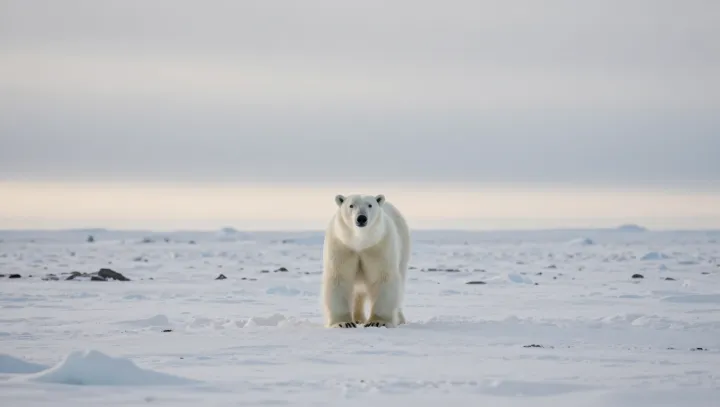
Sea ice does not just melt. It rearranges power. As polar bears retreat with the shrinking ice, ecologists warn that the Arctic food web is not simply losing a predator but undergoing a structural rewrite that can push more carbon from ice and land into the atmosphere.
The unsettling claim is that fewer bears can mean more greenhouse gas. With bears absent, seal numbers can rise and alter grazing pressure on fish and zooplankton, which in turn reshapes phytoplankton blooms and biological carbon pump efficiency in the upper ocean. On shore, more carcasses left by warming, not hunting, can feed Arctic foxes, gulls and even microbes, shifting decomposition rates and methane production in tundra soils. These are food-chain changes, but they are also biogeochemical shifts that tweak fluxes of carbon dioxide and methane across air, water and ice.
More radical still is the idea that the bear’s loss accelerates the ice’s loss. Bears help regulate seal breathing holes and haul-out sites; without them, seals can redistribute, opening more areas of thin ice that absorb solar radiation and speed local melt, a small but real addition to sea-ice–albedo feedback. Where sea ice vanishes, coastal ecosystems flip from reflective platforms dominated by predators to darker, wave-exposed coasts dominated by scavengers and bacteria, each with different carbon budgets and heat exchange patterns. What disappears in fur and muscle can reappear, quietly, as heat in the global air.