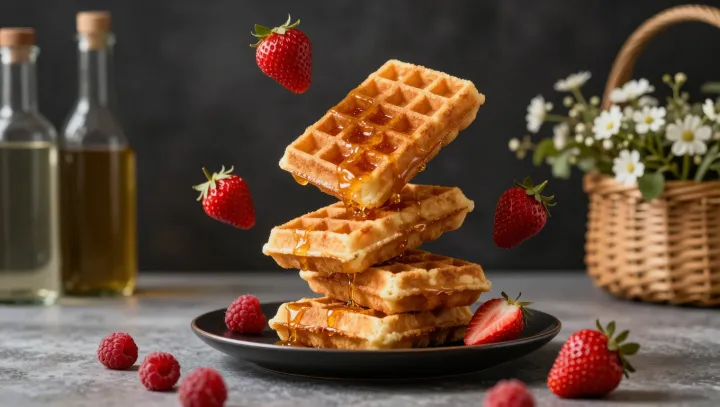
Authenticity here is mostly branding, not heritage. The best known Belgian waffle in North America comes from a World’s Fair stand recipe, sweetened, yeast‑raised, loaded with toppings. That formula, marketed as exotic and European, fixed itself in diners, hotel buffets and frozen aisles as the definitive reference point.
The irony is blunt. Belgians do eat waffles, yet the airy grid piled with whipped cream and strawberries is closer to an export product than a household staple. Inside Belgium, denser Liège waffles, with pearl sugar and a caramelized crust, are more common as a street snack than as a morning routine. Many people there do not sit down to waffles for breakfast at all.
What Americans now defend as traditional is therefore a kind of culinary retrofit, shaped by concession‑stand logistics, American sweetness levels and the need for a portable showpiece. Food historians note how such staged recipes, once scaled through media and tourism, overwrite quieter local habits. A fairground dessert became a national breakfast script, while the country in its name largely moved on.