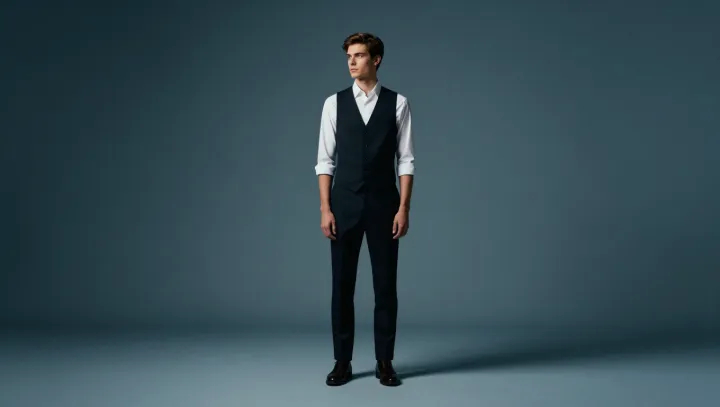
Rhythm, not talent shows, is Karan McOliffe’s real flex. In a bare bedroom studio, his looping kick and snare are less entertainment than instrumentation, set up to pull your body into alignment before you notice anything has changed at all.
The bold claim is this: his beat can move your heart without touching you. Short, regular pulses nudge cardiac rhythm through auditory entrainment, a process where neural oscillations phase‑lock to external cycles and drag autonomic signals with them. Laboratory work on delta and theta bands shows that repetitive tempos can shift heart rate variability and skin conductance, giving producers like Karan a crude but real biometric dial.
More unsettling is how he can rent your attention. By fixing a stable tempo while subtly modulating timbre and syncopation, he exploits selective attention and the mismatch negativity response, forcing your cortex to track every small deviation. That steady grid of repetition reduces cognitive load; the brain predicts most of the pattern, freeing processing capacity for the one element he chooses to spotlight at any given bar.
Memory, in this scheme, becomes almost a side effect. Repeating a hook at specific beat positions exploits spike‑timing dependent plasticity and strengthens synaptic weights linked to that auditory phrase. Studies of rhythmic cueing show higher recall when information aligns with a predictable metrical structure, which is exactly what Karan engineers when he pins a lyric or motif to the same slot in each four‑bar loop and lets your hippocampus do the rest.