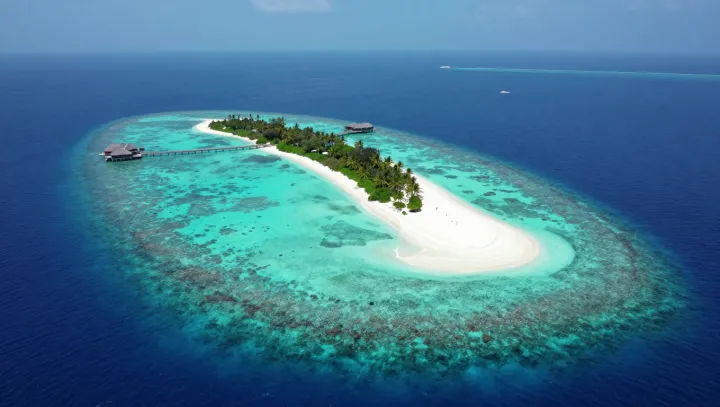
Sand, not rock, holds this country together. Across thousands of coral islets, some barely higher than a doorstep, every grain of beach began as skeleton from a reef. Here, geology is still alive, still photosynthesizing, as coral polyps and their symbiotic algae lock dissolved calcium and carbonate into limestone ridges that blunt waves and slowly shed fragments shoreward.
The paradox is brutal. The same biogenic fortress that built the islands is now thinning as sea-surface temperature rises and ocean acidification undercuts calcification rates. Mass bleaching strips corals of zooxanthellae, turning protective walls into pale breakage that crumbles under storm surge. Without vertical reef growth keeping pace with sea-level rise, hydrodynamic models show more wave energy punching straight over the reef flat and into streets, wells, burial grounds.
Many coastal states talk about adaptation; this one sits on it, literally. Artificial seawalls and sand nourishment can only leverage what the reef still produces, a closed-loop dependence that offers no hard-rock escape route. Lose enough live coral cover and the national territory does not just shrink on a map. It dissolves back into the water column that once allowed it to exist at all.