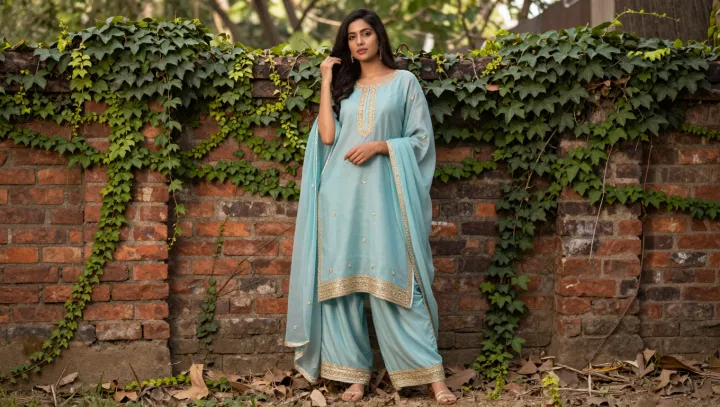
A dress pattern is not neutral; it quietly edits a body. The same plus-size block can either compress a figure or carve out a leaner outline when the waist seam slides only a few centimeters and the vertical structure is re-routed. What shifts is not the body, but the optical ratio between torso length, hip span, and fabric flow.
Counterintuitively, a low dropped waist often makes a plus-size body look heavier. It stacks bodice and hip mass into one long block, then lets the skirt flare at the widest point, so the eye reads a large rectangle. Lift that seam to a high or true waist and you create a shorter visual torso and a longer uninterrupted lower column; this plays directly with the golden ratio and with basic center-of-gravity perception in human vision.
Even more decisive is the vertical architecture of the cloth. When darts, princess seams, or panel lines run in clean uninterrupted paths from shoulder to hem, they function as strong vertical vectors that guide gaze up and down instead of side to side, a textbook example of Gestalt continuity. Break those lines with horizontal color blocking, patch pockets, or a banded waist, and you create visual stop signs that widen the frame, making the same pattern suddenly read as bulk instead of length.