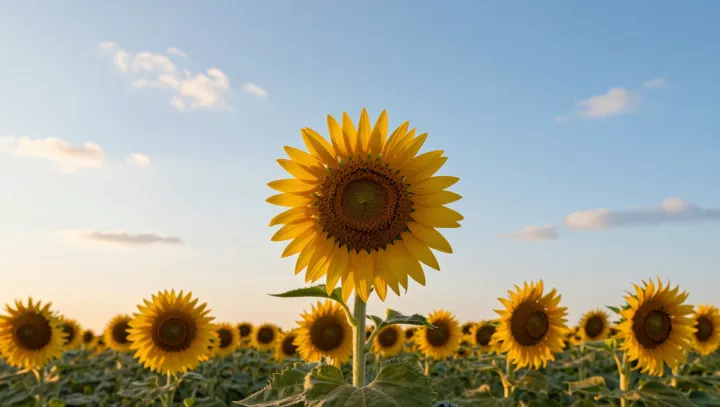
Those spirals in your sunflower snack are not decorative accidents. They are the final printout of a long biochemical and mechanical protocol running inside the plant. First comes energy capture. Chloroplasts in leaves turn incoming photons into chemical currency through photosynthesis, feeding carbon skeletons and ATP into developing tissue at the flower head.
More surprising is how geometry, not taste, drives the layout of each seed. At the growing tip, the floral meristem behaves like a self-organizing factory floor, where the hormone auxin and its transporter protein PIN1 form shifting peaks of concentration that mark where each new floret will appear. Because new peaks form at the spot of lowest interference from existing ones, the system naturally settles into phyllotaxis angles close to the golden angle, giving rise to counter-rotating spirals whose counts often match Fibonacci numbers.
Hidden underneath the hard shell of each seed is still more engineering. Cell division and turgor-driven growth push developing seeds outward while the stiffening pectin-rich cell wall and lignin deposition hold them in place, turning a soft disk into a load-bearing composite plate. By the time you crack one seed between your teeth, you are breaking the endpoint of a distributed optimization process that started with soil minerals, water uptake through xylem, and a quiet computation of space, force, and light.