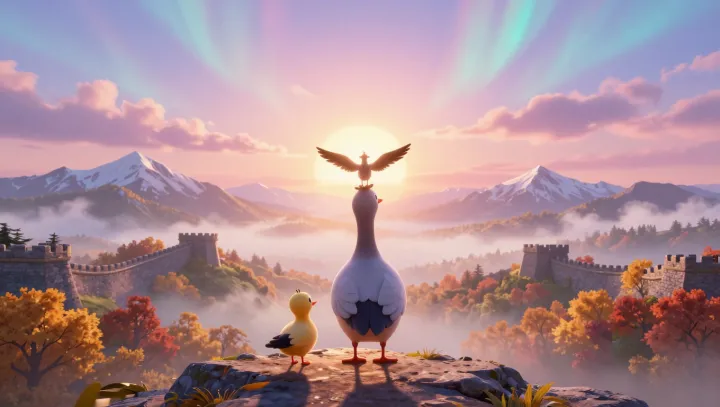
A goose leading a ragged flotilla of ducklings is not a cute glitch in nature; it is a quiet revolt against genetic expectation. Around that mismatched line of bills and feet runs a strict biological script called filial imprinting, the rapid learning window that locks a newborn’s social focus onto the first moving caregiver. In geese and ducks, this narrow sensitive period shapes neural circuits in the hyperpallium and midbrain, fixing what counts as “follow that” long before any conscious choice could exist.
Yet the scene also exposes how blunt that wiring is. The machinery cares about timing, motion, and sound patterns, not species identity or DNA. If downy ducklings hatch near a goose, their visual cortex and auditory pathways bind to her silhouette and calls, while her own endocrine system, primed by prolactin and oxytocin-like peptides, drives brooding, guarding, herding. The result looks like cross-species altruism. In practice, it is two overlapping algorithms of attachment and parental drive locking onto whatever fits their input rules well enough to trigger them.
The deeper shock is not that biology is hard-coded, but that its code bakes in room for improvisation. Imprinting secures survival by forcing a fast, irreversible decision; at the same time, its crude feature detection lets “family” stretch across species lines when environments scramble the usual cues. A goose raising ducklings shows an animal mind that is neither rigid instinct nor free choice, but a rule-based system that still leaves space for unexpected kin.