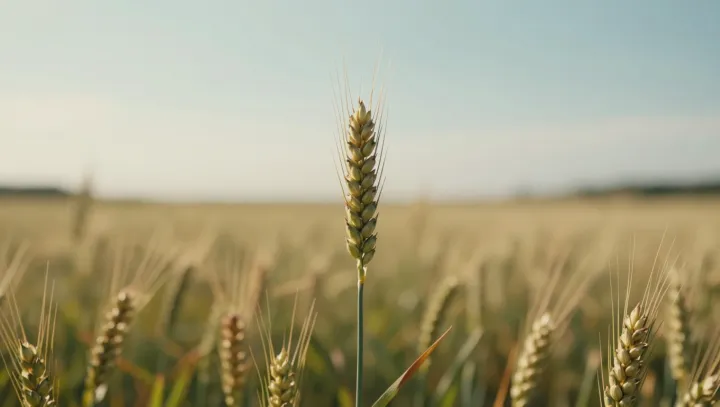
Wheat should not be in your steamed bun at all; it is a Near Eastern migrant that China accepted late and grudgingly. Barley and wheat moved along steppe and oasis routes, adapted to Mediterranean-season rains and deep plowing, then met a Chinese core that had already optimized for millet and rice. The crop arrived as seed and as idea, but not as a full package of tools, draft practices, or social routines that made it dominant in its homeland.
The real brake was not taste but hydraulics. Early Chinese farming clustered along river terraces where simple surface canals and seasonal flooding could keep Near Eastern wheat alive without recreating the heavy plow, iron share, or large-scale terracing that supported it elsewhere. Millet fit light tools and thin soils; rice fit paddy basins. Wheat, demanding carefully timed sowing, deeper tillage, and tighter control of evapotranspiration, survived only where river water and silt did part of the work for free.
Only a hard-edged state could afford to push this misfit crop inland. Qin rulers wanted calorie-dense, storable grain to feed garrisons and road builders, so they leveraged corvée labor to cut canals, stabilize loess slopes, and roll out iron implements across interior uplands. Riverbank plots turned into regimented grids; scattered experiments became a closed-loop supply system tied to taxation. What began as a foreign grain on the margins turned into the empire’s dryland insurance policy once the state had the engineering muscle to force ecology to comply.