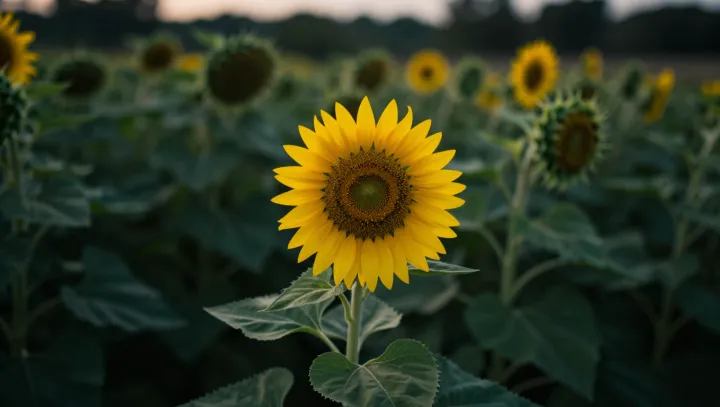
Sunflowers are far less romantic than the posters claim. Young heads swing because of heliotropism, driven by asymmetric auxin distribution and a tuned circadian rhythm that makes stems elongate faster on one side. Once the flower opens, that movement stops. The head locks, usually facing east.
The stubborn part is cultural, not botanical. People keep treating the plant as a self-help diagram because the growth phase is visually loud and easy to film, while the static mature phase looks like a freeze-frame. Cognitive bias loves that edit. We remember the cinematic swiveling and quietly delete the boring, stationary truth.
There is also a deeper comfort in this selective reading. A sunflower spends its most vulnerable stage constantly recalibrating to optimize photosynthesis, then fixes its gaze when reproduction matters most. That arc maps neatly onto the story many people want: restless searching, then steady commitment. Biology supplies the raw script; metaphor cuts out the unflattering scenes and keeps the glow.