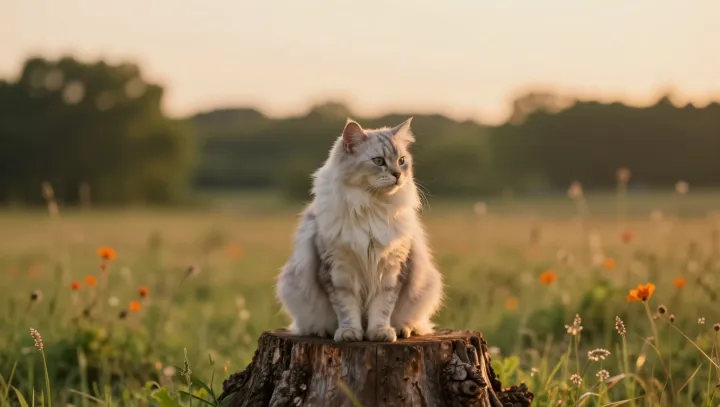
Soft fur lifts, whiskers fan outward, and a low vibration starts to build. Scratching a cat’s chin looks trivial, yet it recruits an entire neural reward circuit that can end in a full‑body purr.
The underside of the chin and around the jawline holds a dense cluster of mechanoreceptors and tactile hair follicles. When fingers press and move across this zone, they trigger rapid firing in sensory neurons that project through the trigeminal nerve into the brainstem. From there, signals fan out to the somatosensory cortex and, crucially, to the limbic system, which evaluates emotional salience and hedonic value. If the stimulus matches a pattern associated with grooming and social bonding, reward pathways in the ventral tegmental area release dopamine, while endogenous opioids such as endorphins modulate pain thresholds and anxiety.
This chemical cascade biases the autonomic balance toward the parasympathetic nervous system, lowering arousal and promoting calm. In cats, that shift can flip a dedicated motor pattern generator in the brainstem that coordinates rhythmic laryngeal muscle contractions and diaphragmatic movements: the purr. The loop then becomes self‑reinforcing. Vibrations from the purr feed back through additional sensory receptors in muscles and bones, adding more comforting input into the same limbic and reward circuits. A small patch of skin, a few centimeters of movement, and an entire self‑soothing engine quietly spins up under your hand.