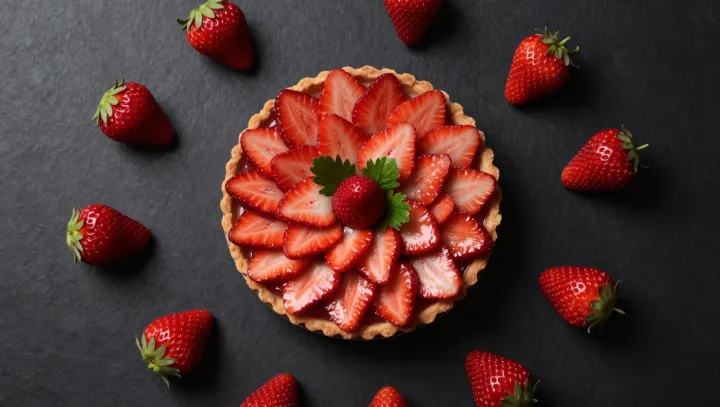
Strawberries win the flavor fight against fat. That sounds wrong in a bowl of mousse or mascarpone, yet chemistry keeps siding with the fruit. With nearly ninety percent water, a strawberry behaves less like a slab of flavor and more like a delivery system, moving sugars, organic acids and volatile aroma molecules efficiently through a creamy matrix.
Richer taste does not come from richness alone. It comes from contrast, and strawberries supply it through titratable acidity and a sharp bump in Brix that reset the palate between bites of dairy fat. Those acids and sugars diffuse quickly in an emulsion, while small hydrophobic aroma compounds such as esters and aldehydes partition into the fat phase, where they are protected, concentrated and then released as the mousse warms in the mouth.
The real surprise is how water boosts intensity instead of watering it down. High water content speeds mass transfer, so flavor molecules reach taste receptors and olfactory receptors faster than those locked in denser, fattier ingredients. Dairy proteins such as casein also bind some strawberry volatiles, stretching their release over several seconds. Cream gives structure and mouthfeel, but the fruit, almost all water, supplies the punch.