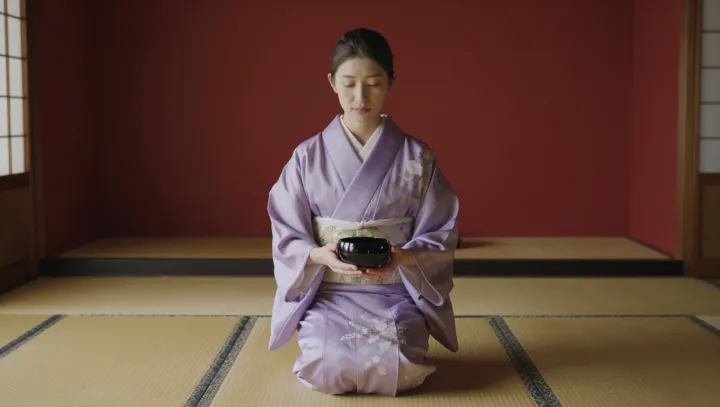
Soft lilac beside a vivid obi is not nostalgia. It is a highly optimized visual device that modern color science can now decode. Traditional kimono rules grew from ruthless empirical testing of what the human eye tolerates in layered cloth under shifting light, long before anyone named cone cells or chromatic adaptation.
The striking part is this near one to one match with laboratory theory. Pairings that artisans called elegant often sit near complementary positions on a hue circle, maximizing simultaneous contrast while staying within comfortable luminance ranges described by Weber contrast. The eye’s opponent process system, which encodes signals in red green and blue yellow channels, favors such controlled opposition: lilac pulls on red blue receptors, the obi leans into yellow or green, and the brain reads depth and hierarchy instead of chaos.
Even seasonal rules look less poetic than algorithmic. Spring pastels reduce saturation, easing retinal fatigue and exploiting color constancy, while a concentrated obi supplies a single high chroma anchor for figure ground segregation. Layering codes, once taught as etiquette, now resemble constraints in color appearance models like CIECAM, limiting value and saturation jumps between inner and outer robes so that motion, skin tone, and textile pattern remain legible in crowded spaces.