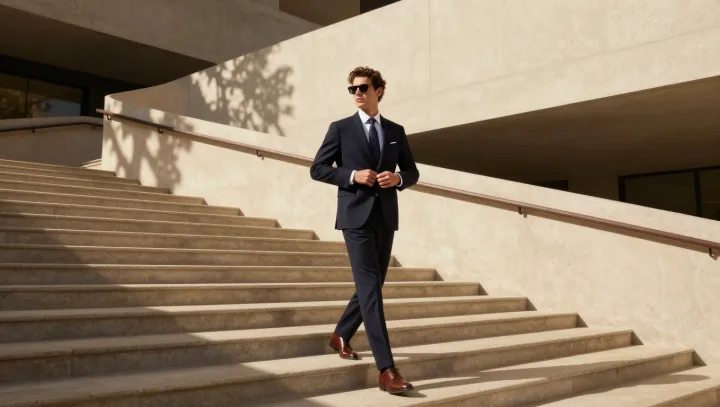
Clean glass and steel do the first bit of bragging long before any handshake. In a minimalist lobby, uninterrupted verticals and sharp horizontals echo the same cues that social neuroscientists track when they study dominance displays: height, order, and clear boundaries.
A well-fitted suit then rides that signal. Tailoring forces spinal extension, widens the shoulder line, and narrows the waist, which amplifies the body’s thoracic expansion and alters proprioceptive feedback so the wearer stands more like a winner and less like a question mark. Observers do not consciously parse any of this; the fusiform face area and superior temporal sulcus snap to a verdict in fractions of a second, bundling posture, symmetry, and grooming into a fast estimate of competence.
The geometry matters more than the fabric label. Straight lapels align with the building’s verticals, pressed trouser creases mirror floor joints, and the absence of visual noise lets the brain’s feature detection machinery lock onto simple ratios: shoulder to hip, head to torso, man to room. In social hierarchies, those clean ratios read as surplus control over both body and environment, so status is granted almost by reflex, long before the first word is spoken.