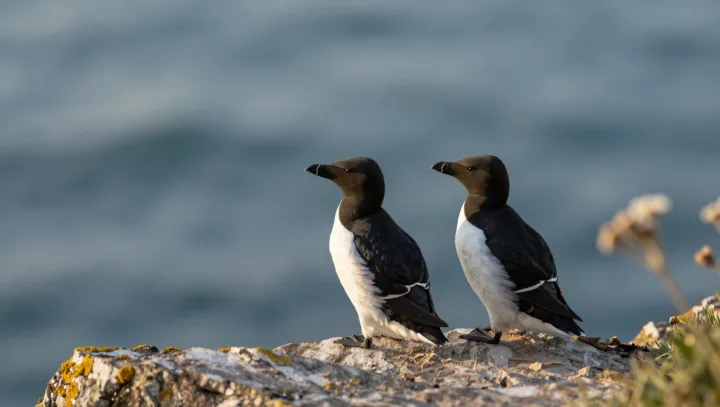
Bare rock, not calm air, decides the rules here. Wind hits the cliff and splits, forming violent shear layers and tight updrafts that seabirds treat as infrastructure, not hazard. Their long, narrow wings act as variable‑geometry airfoils; by twisting feathers they shift lift distribution, tap into micro‑eddies, and ride those invisible steps straight toward the ledge.
The real surprise is that brute force matters less than information. Packed into those small heads is a vestibular system tuned to angular acceleration and a visual system that tracks optic flow, the pattern of surface motion across the eye. By locking on the ledge and reading how fast rock streaks past, a bird solves real‑time trigonometry and estimates closing speed without a single conscious calculation.
Precision, though, is learned, not gifted. Young birds miss, abort, circle again; over hundreds of attempts they build a procedural memory of local turbulence fields and stable approach vectors, a kind of internal flight map that rivals any autopilot algorithm. What looks like casual grace in a hurricane is really a hard‑won treaty between muscle, physics, and experience.