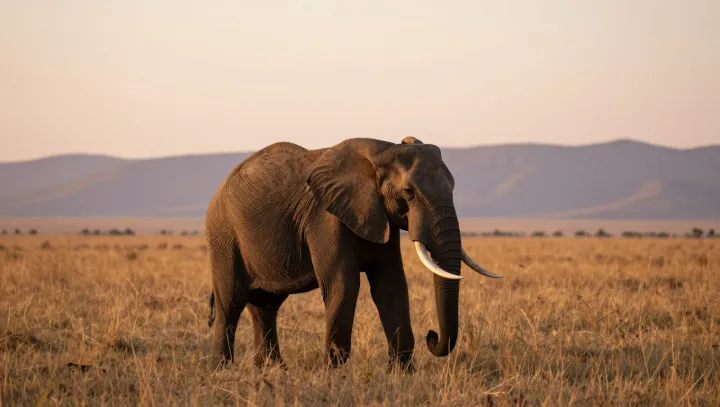
An elephant is less a giant mammal than a mobile infrastructure project, its body wired to move soil, water and plants with unsettling efficiency. Out front, tusks act as chisels and crowbars, prying bark, felling trees and digging wells that expose buried groundwater. Each strike is powered by dense dentin and anchored in massive skull bones, turning feeding into large‑scale habitat engineering for countless other species that drink and browse in its wake.
Yet the real shock is how seamlessly the trunk plugs into that system. This fused nose and upper lip, packed with tens of thousands of muscle fascicles, works like a high‑precision hydraulic arm, gripping single leaves or hauling logs while also serving as snorkel, pump and sensory probe. By stripping branches here and scooping mud there, the trunk closes the loop the tusks open, redistributing nutrients and carving new routes for water flow across dry ground.
Most underestimated is the skin, which turns passive surface into survival hardware. Deep wrinkles and cracks multiply surface area, boosting convective heat loss while trapping water and mud that slowly evaporate, a living version of evaporative cooling systems. Micro‑furrows hold dust that blocks solar radiation; thick dermis buffers bites and thorns during foraging raids. Together, tusks, trunk and skin form one integrated toolkit: a heat shield, pump and demolition rig that rewrites where food and water can exist.