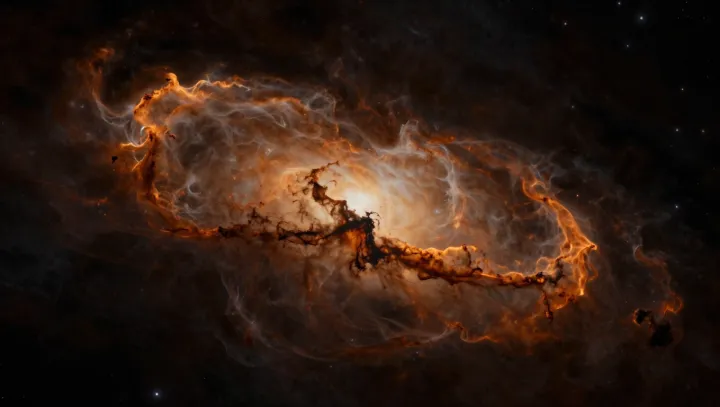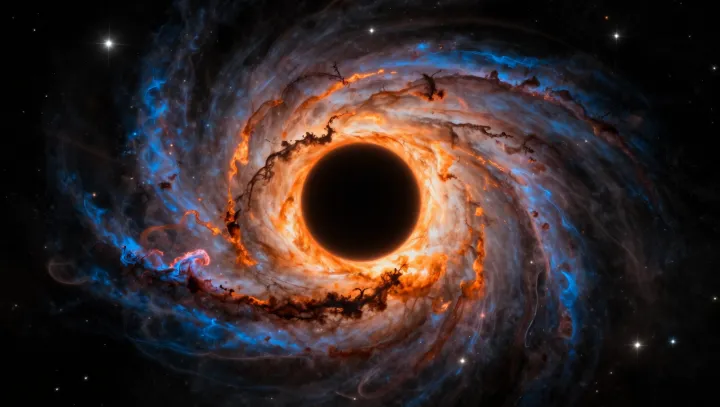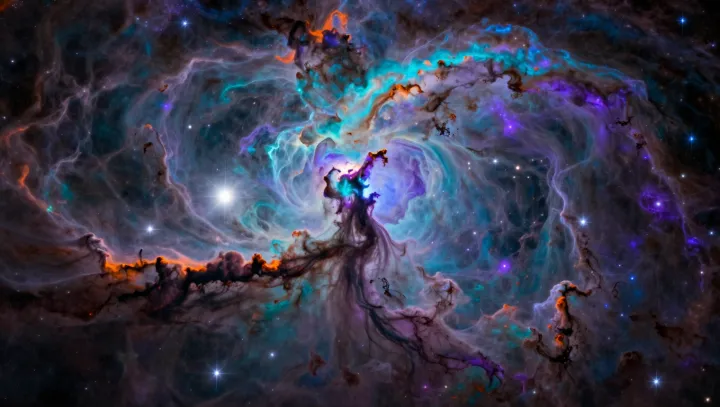
Light steals the scene before the stars do. A bright, cloudlike nebula dominates the deep-space frame, its blue and orange glow cutting through a packed starfield. Short exposures would miss this chaos; long integration and narrowband filters isolate ionized gas from the glare of surrounding suns, turning the gas itself into the headline subject.
What looks serene is, in fact, violent. The blue regions trace hydrogen and oxygen stripped of electrons, classic signatures of ionization fronts driven by young massive stars. Orange arcs follow sulfur emission, mapping cooler, denser pockets where shock waves slow. Dark lanes slice across the glow; these filaments are cold molecular clouds, rich in dust grains that scatter and absorb starlight, hiding embryonic stars inside.
This frame argues against the idea that the cosmos is best read as a single grand structure. Here the story is local. Radiative feedback and gravitational collapse, not some tidy megastructure, sculpt the view. The sheer number of pinprick stars only underlines the point: the background hints at the galaxy, but the physics of the interstellar medium writes the script in this one, crowded patch of sky.