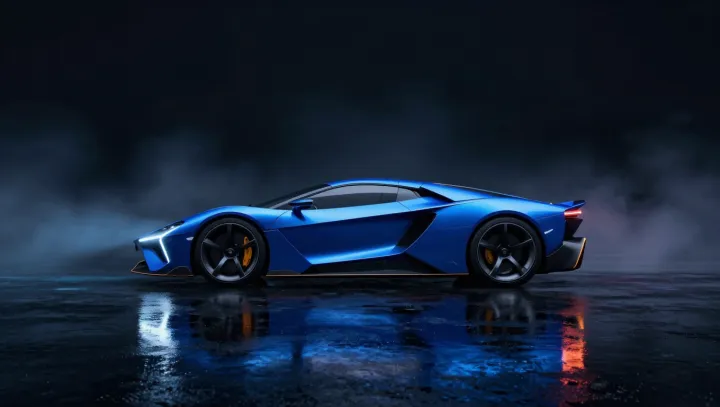
High speed does not tear a supercar loose; it nails it down. As air resistance climbs with the square of velocity, designers hijack that penalty and convert it into downforce, using Bernoulli pressure gradients and viscous shear to press the chassis into the asphalt instead of letting it wander.
Beneath the razor‑sharp body, the real anchor is the underfloor. A low nose and flat belly pan feed a Venturi‑style tunnel, where accelerated flow under the car drops static pressure and creates ground effect, so the car behaves like an inverted wing glued to the road. Rear diffusers then expand the airflow again, sustaining a low‑pressure wake that multiplies vertical load without a proportional spike in drag.
Big rear wings get the headlines, but their job is more bookkeeping than heroics. Designers chase aerodynamic balance, trimming front splitters, canards and rear elements so the center of pressure sits close to the center of gravity, limiting yaw and pitch moments at extreme speed. Vortex generators and sculpted wheel arches herd turbulent flow away from the body, cutting lift and stabilizing the boundary layer that would otherwise buffet the car sideways.
The final referee is the suspension, not the spoiler. High‑speed stability depends on keeping ride height and rake inside a narrow aero window, so engineers pair stiff springs with adaptive dampers to stop pitch and roll from breaking the carefully tuned ground clearance. What looks like a static sculpture in carbon fiber is really a pressure‑managed machine, negotiating every extra mile per hour with the air itself.