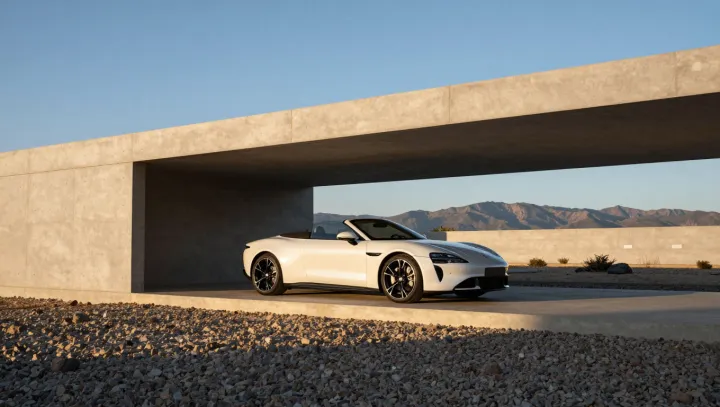
Airflow, not brute power, is the real luxury at 120 km/h. A 500‑horsepower convertible can feel oddly serene because its body is sculpted to cut drag while keeping lift in check, so the airstream stays attached, the cabin pressure stays stable, and the car stops fighting invisible turbulence that makes many tall hatchbacks fidget.
The calmer feel starts with drag coefficient and frontal area, not with the engine map. A low Cd shell, a sealed underbody, and an active rear spoiler trim the pressure differentials that usually tug at the steering wheel, while tuned vortex generators at the A‑pillars manage the shear layer around the open roof, so wind thrum drops and the driver senses less random input even when absolute speed is high.
Efficiency at that same speed is mostly a gearing trick. A tall final drive and long top gear keep engine speed near the sweet spot for brake specific fuel consumption, where pumping losses and friction losses are minimized and turbo boost is barely needed, so the big engine loafs at modest rpm while its broad torque curve still delivers effortless passing without noisy downshifts.
Family hatchbacks often sabotage themselves here. Shorter gearing keeps their smaller engines in a narrow torque band, so at 120 km/h they buzz at higher rpm, burn more fuel per kilometer, and respond with jumpy throttle changes, while the supposedly excessive convertible feels like it has headroom in reserve and therefore reads as calmer, cleaner and oddly restrained.