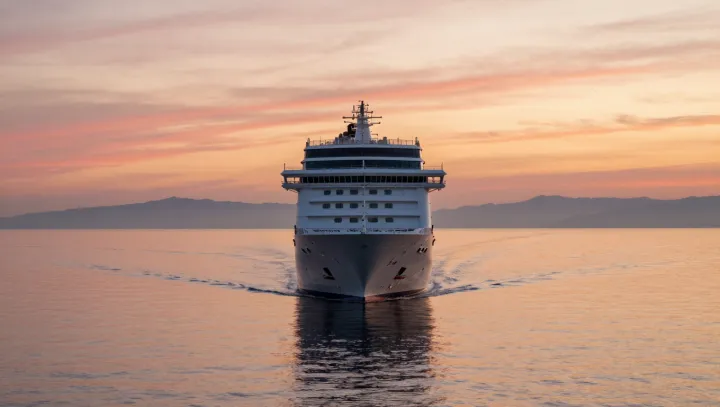
Steel walls towering above the pier look like a stability disaster in slow motion. That visual instinct is wrong. A cruise ship survives rough seas because its real balancing act happens underwater, where center of gravity and center of buoyancy fight for leverage around a shifting point called the metacenter.
Stability, engineers argue, is not about being heavy, it is about where that weight sits relative to displaced water. The ship’s center of gravity is driven downward by dense machinery and ballast, while the center of buoyancy, defined by Archimedes’ principle, moves sideways as waves heel the hull. The vertical distance between the center of gravity and the metacenter, known as metacentric height, sets the strength of the righting moment that snaps the vessel back upright.
Too large a metacentric height, and the ship snaps back so abruptly that passengers feel a harsh, uncomfortable roll. Too small, and the righting arm weakens, edging the vessel toward dangerous, slow motion tilts. Naval architects tune hull breadth, draft, and ballast to hit a narrow target range, treating each deck of cabins as a variable in a giant stability equation. What keeps a 200,000‑ton hull upright is not brawn but the quiet geometry of that hidden balance point below the waves.