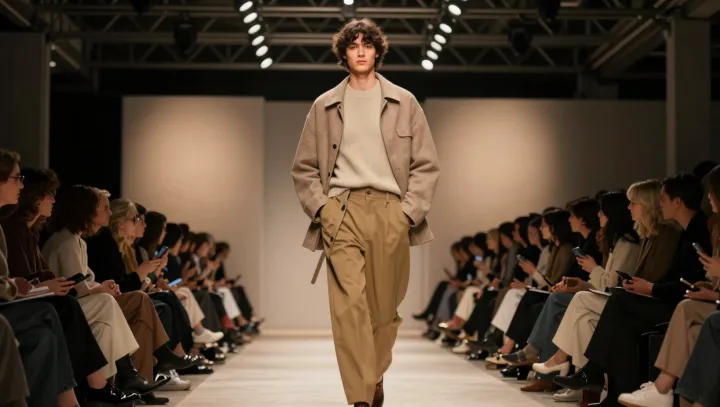
Those baggy trousers in your closet began as a dare. On the runway, menswear functions less as a shop window and more as a volatile lab bench, where oversized cuts, layered knits and desaturated earth tones are pushed to near-caricature so designers can stress-test proportion, color harmony and fabrication under maximum visibility.
The blunt truth is that risk sits cheapest on models, not on mass consumers. Luxury houses treat runway looks as prototypes in a design funnel: extreme samples gauge editorial reaction, social engagement and wholesale orders, generating data on which silhouettes photograph well, which yarn weights hold structure, which color temperatures feel modern on different skin tones. Only the most adaptable ideas survive the fit meetings, cost engineering and supply chain constraints that follow.
What finally reaches you is the debugged version. A drop-shoulder coat loses ten percent of its volume, knitwear sheds one layer, a muddy ochre becomes a safer camel; yet the underlying pattern blocks and yarn compositions still trace back to those earlier trials. Normal menswear, then, is not born neutral. It is the residue of risk that has been edited down until it reads as obvious.