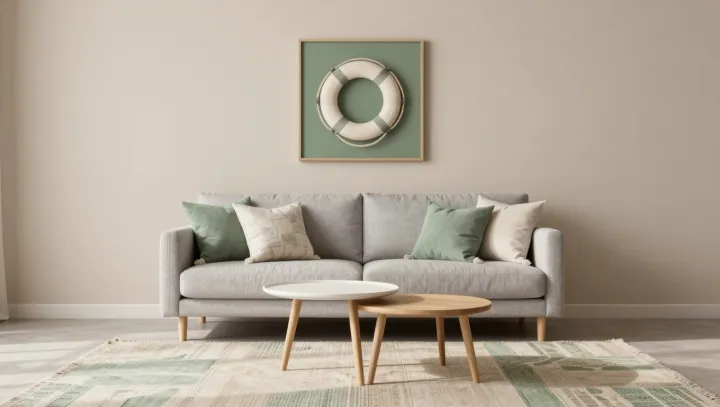
An almost empty living room can be more engineered than a crowded one. Soft, low-contrast color on walls and floors reduces edge detection in the visual cortex, so boundaries blur and the envelope of the room feels pushed outward. One pale rug, close to the wall color, acts like visual spillover, extending the floor in your mind and muting the hard junction where wall meets ground.
The real trick is restraint. Few objects mean less cognitive load, so the prefrontal cortex does not waste resources sorting shapes, and the body reads that efficiency as calm. A single deep-textured throw on a flat sofa, or a slubbed linen cushion on a smooth leather chair, creates micro-contrast in tactile expectation without adding visual noise, giving the brain a small reward signal while the scene still reads as quiet.
Placement finishes the illusion. One tall plant or lamp pulled slightly away from the wall lengthens sightlines and hints at more depth behind it, exploiting figure–ground perception. A low table centered on an empty rug becomes a stable anchor point; everything else recedes. The room looks almost bare. To the brain, it registers as breathing space.