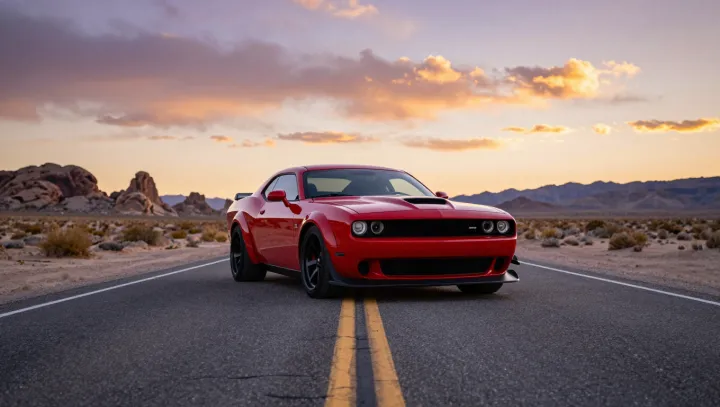
Blinding sand, not glossy dyno charts, sets the real limit in desert driving. At highway-style cruise, a dual-clutch gearbox shaving ten milliseconds off a shift feels like progress, yet at extreme off‑road pace the bottleneck moves upstream to the driver’s own sensory hardware. Human visual processing, from retinal phototransduction through cortical integration, runs on a sluggish schedule compared with silicon and hydraulics.
The hard truth is simple. Your eyes lag. Peer‑reviewed studies of saccadic reaction and choice response time routinely cluster around two hundred to three hundred milliseconds, while motion perception stabilizes only after the brain performs temporal integration across multiple frames of input. At desert velocities, that delay translates into several meters traveled before a rock, rut or dune crest is even classified as threat rather than texture, long after any gearbox has completed its near‑instant actuation sequence.
Engineers still chase shift speed because the test bench is obedient and quantifiable, whereas human factors feel messy and political. A transmission control unit can be optimized with control theory and telemetry; visual acuity, vestibulo‑ocular reflexes and cognitive load demand helmets, eye‑tracking and uncomfortable questions about who should be driving at all. So hardware laps the circuit in milliseconds, while biology, stuck with axonal conduction and synaptic delay, quietly calls the checkered flag.