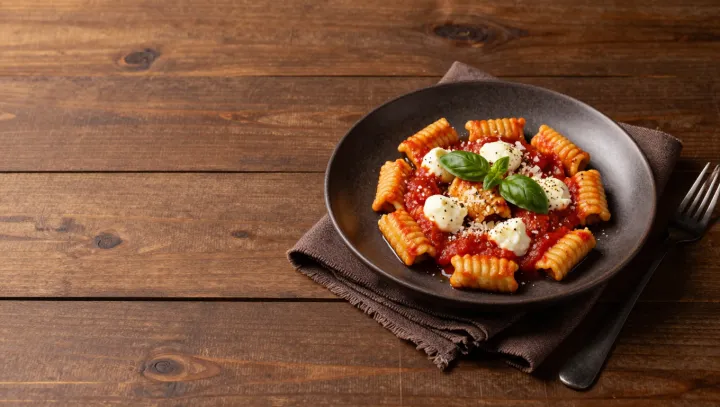
Gnocchi does not just feed you; it edits your brain state. Once a cheap, wartime way to stretch flour and potatoes, the dish now works like a compact lab experiment in satiety and mood, especially when drenched in tomato sauce and sealed under mozzarella.
The real surprise is that its comfort power is not mystical at all. When gnocchi simmer, starch gelatinization turns dense granules into soft gels, speeding gastric emptying at first yet triggering a stronger insulin response and later activation of satiety hormones such as cholecystokinin and peptide YY. That soft, pillowy bite is sensory evidence of a biochemical shift: more surface area for amylase, faster glucose appearance in blood, then a delayed, steadier fullness that outlasts the last forkful.
Even more decisive is what clings to those dumplings. Tomato sauce, rich in glutamate and 5′-ribonucleotides, hits umami receptors on the tongue, which in turn amplify signaling through the gustatory cortex and nudge the hypothalamus toward a stronger sense of satisfaction per calorie. Melted mozzarella adds emulsified fat and casein-derived peptides, recruiting the brain’s reward circuitry, including dopaminergic pathways in the striatum, in a way plain boiled potatoes never could.
So a plate once built to prevent hunger now hacks perception of fullness and comfort. On a crowded weeknight, when cognitive load is high and stress hormones are already elevated, that trio of gelatinized starch, umami density, and warm fat acts like a manual override on appetite and mood, a tiny, steaming armistice on a plate.