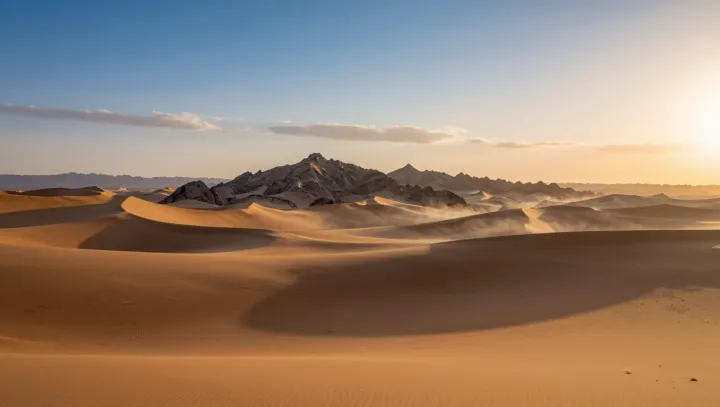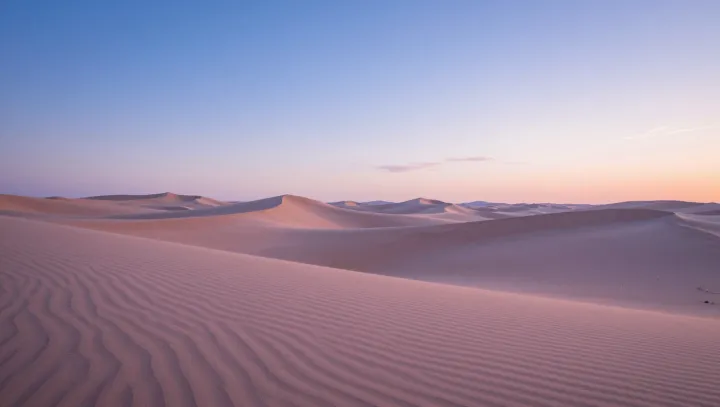
Stillness here is an illusion. Under a clear sky, a dune that appears sculpted and fixed is in fact a moving body, its bulk creeping across the ground by meters over a single cycle of seasons while casual visitors see only the same familiar ridge line.
The awkward truth is that motion does not need drama. Grain by grain, wind shear stress lifts individual particles into saltation, a controlled hop that turns the air just above the ground into a thin conveyor belt. Each grain arcs forward, strikes, and ejects other grains in a chain reaction known in aeolian transport as splash. Many hops. One direction. Over time, that flux of grains migrates the dune downwind, even though any single snapshot looks static to the human eye.
Equally counterintuitive is how orderly this chaos becomes. On the windward slope, turbulent flow accelerates, maintaining a continuous supply of mobile grains, while on the sheltered slip face, grains lose momentum and avalanche downslope at the angle of repose, rebuilding the steep lee side. Accumulation here. Erosion there. The whole body effectively walks, preserving its profile because erosion and deposition remain in near balance, a classic case of bedform migration in granular flow.
Most unsettling of all is that such movement requires no storm spectacle. Modest, persistent winds can sustain a sediment transport rate high enough to shift dune crests by distances a person could pace out, yet the process hides in low, constant hiss rather than in cinematic gusts, leaving a mobile desert that masquerades as stone.