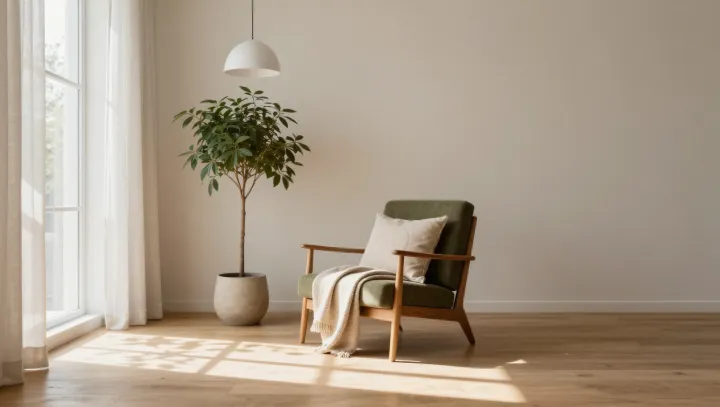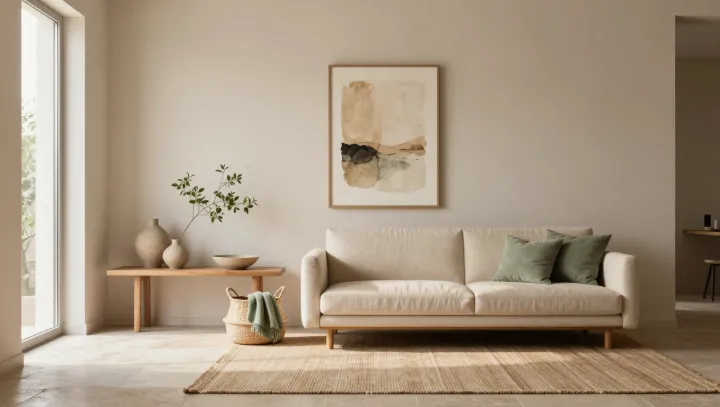
Empty floor does the first job. Before any color or fabric, open space hits the visual system as a clean signal, not a noisy one, so the brain spends less glucose on search and sorting tasks. With fewer edges and objects to track, the visual cortex quiets, heart rate often dips slightly, and the room reads as calm rather than cold.
The surprise is that minimal rooms can feel warmer than stuffed ones. Packed decor increases visual entropy and demands more saccades, which the brain unconsciously treats as work and even as a mild threat of disorder. Clear surfaces, by contrast, create strong figure–ground separation, so one lamp, one chair, one rug register as intentional, almost like bold type on a blank page. That sense of order is what many people mislabel as warmth.
A sparse room also flatters prediction. The brain’s predictive coding machinery can map the space quickly, with few hidden zones or ambiguous shapes, which lowers uncertainty and muscle tension. Finishing a room, then, is less about adding objects than about reducing unresolved signals, until the space matches what the brain can process without strain.