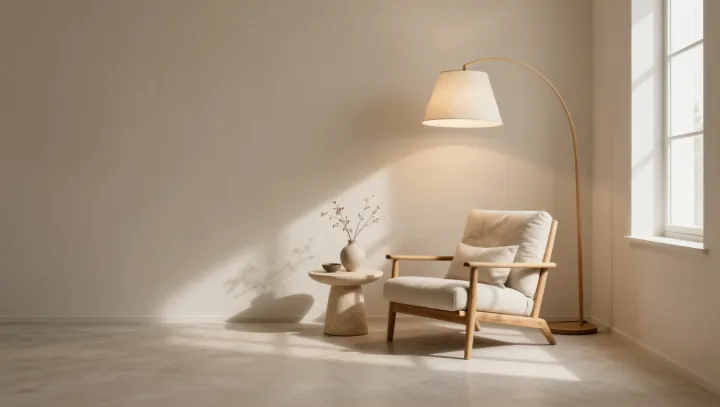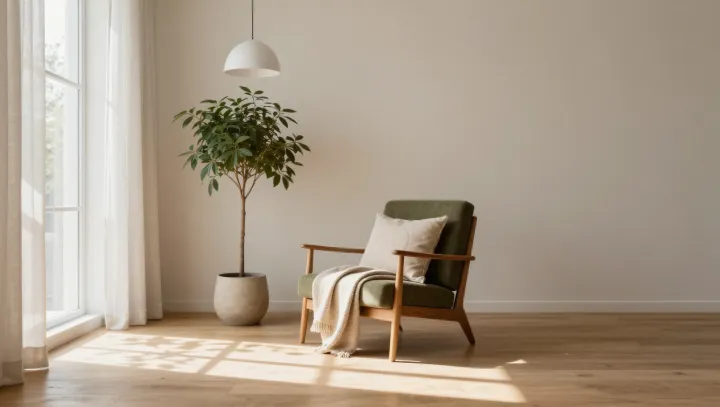
One chair and one plant sound trivial; they are not. A single seat placed in direct natural light, paired with a broad-leafed plant, can trigger measurable drops in heart rate and electromyographic muscle activity that rival those seen after a brief guided relaxation audio track, according to environmental psychology and building-health studies.
The real driver is not decor but physiology. When the eye registers full-spectrum daylight and the complex green patterns of foliage, the visual cortex sends signals that favor activation of the parasympathetic nervous system, the branch that slows sinoatrial node firing and promotes skeletal muscle relaxation. Short exposure in such a corner has been linked to reduced salivary cortisol and lower skin conductance, markers that laboratories use as standard proxies for acute stress.
The comparison with guided relaxation is sharper than many designers admit. Controlled experiments show that sitting quietly in a bare, artificially lit room leaves heart rate variability flat, while adding only one sunlit chair and one plant increases vagal tone to a degree statistically comparable to listening to a structured breathing script. The body does not wait for intention; it responds to photons, leaf geometry, and perceived refuge, turning a tiny living-room adjustment into a repeatable stress intervention.