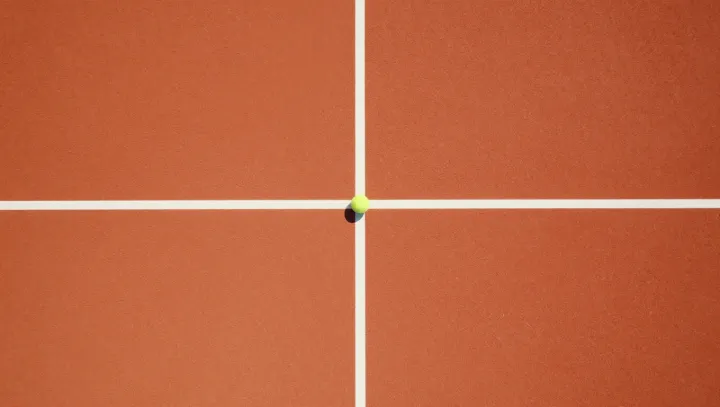
Perfection in a tennis serve is far less generous than players like to imagine. A ball that kisses the center service mark must land within a corridor only a few millimeters wide once spin, incident angle and court elasticity have had their say. Miss that ideal contact point on the strings by roughly the width of a pencil and the launch vector shifts, magnified over the net into centimeters of lateral error.
The harsh truth is that spin, not power, usually decides whether that edge ball clips the line or floats wide. Off‑center impact increases racket torque and alters the ball’s angular velocity, changing the Magnus force that bends its path sideways and downward. Combine that with a serve struck at a shallow angle to the service box, and a two‑millimeter deviation at contact can translate into several millimeters at the court, enough to flip an in call to out on a hard surface.
Yet the court itself quietly rigs the margins. Hard courts deform under load, then rebound, shifting the effective line by tiny amounts as the ball compresses and then restores its shape. The interaction of normal force, coefficient of restitution and felt friction slightly drags or kicks the bounce, so a ball aimed at theoretical center can, through perfectly ordinary physics, emerge as a fault that misses by the thickness of a line judge’s imagination.