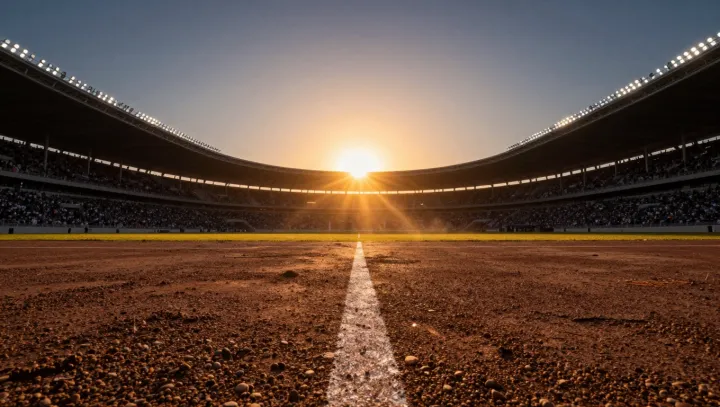
Blinding brightness is not the real contest. Stadium floodlights can push illuminance on the pitch to levels comparable with midday, yet coaches cling to kickoff slots that flirt with the low sun slicing across the stands. Light meters say equality. Human bodies and eyes disagree.
The awkward truth is that photometry is simpler than physiology. Engineers optimise lux, uniformity ratio and colour temperature; players still run on circadian rhythm, melatonin suppression curves and habitual training clocks. A match under so‑called artificial daylight does not hit the same neural state as a match aligned with the late‑afternoon peak in core body temperature, reaction speed and joint flexibility. Marginal? Yes. But elite sport is built on chasing fractions of a percent that statistics later rebrand as home advantage.
There is also a more tactical, slightly cynical layer. A low star near the horizon creates asymmetric glare and contrast gradients that no symmetric floodlight array can reproduce. One goalkeeper spends a half squinting into direct luminance, the other enjoys a backlit view and sharper ball tracking against shadowed seats. Broadcasters demand consistent high lux for high‑frame‑rate cameras. Clubs quietly prefer the physics of a setting sun, which bends rays and throws long shadows that can mask defensive movement and distort aerial judgment in ways the regulations do not even attempt to standardise.