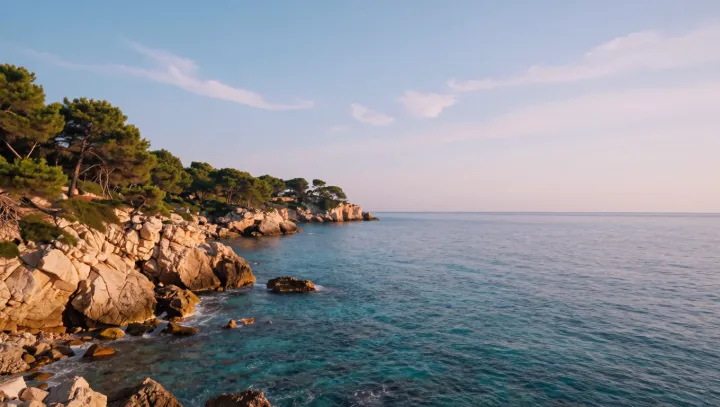
A sun‑blasted rocky shore should feel like an oven. It often does not. At the same air temperature, skin there can lose more heat than it gains, while a shaded city street quietly pushes your body toward overheating.
Rock first cheats the eye through radiation. In full sun it absorbs shortwave solar energy, then re‑emits longwave infrared upward and sideways, not just at your body. Over open water and sky, that energy has a wide escape route, so mean radiant temperature around your skin can sit closer to the air value, instead of spiking the way it does between asphalt, glass and walls that trap and bounce infrared like a slow oven cavity.
Wind then changes the rules. Coastal pressure gradients and unobstructed fetch build steady convection that strips the thin boundary layer of warm, humid air from your skin. Forced convection there can dominate the heat budget, so even warm air cools you, while in street canyons weak airflow leaves that boundary layer intact and turns sweat into a stagnant film.
Water finishes the trick. Spray, high humidity just above breaking waves and even damp rock boost evaporative flux from skin and clothing; latent heat of vaporization silently drains energy from your body. Under a city awning, with dry, slow air and high radiant load from nearby facades, evaporation stalls and metabolic heat has nowhere efficient to go.