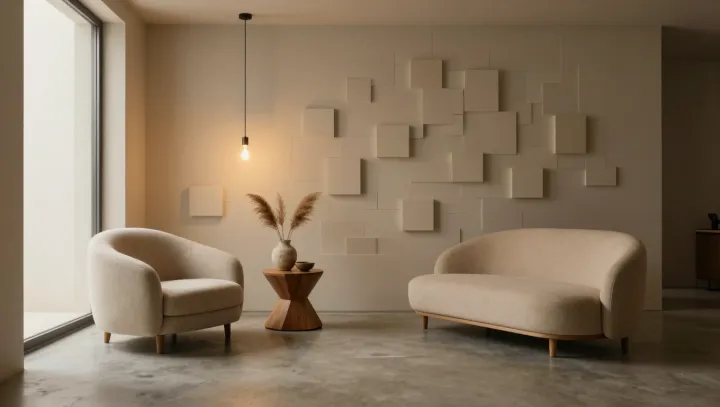
A low-hanging warm pendant does something expensive wellness hardware rarely achieves: it shuts down cognitive noise on contact. Soft, downward light narrows the visual field, dampens cortical arousal, and reduces the stream of stimuli the prefrontal cortex must continuously filter.
The blunt truth is that most high-end wellness devices add tasks. They demand onboarding, app syncing, notifications, data dashboards. Each step adds to decision fatigue and increases cognitive load, even when the underlying promise is relaxation supported by heart rate variability metrics or electrodermal activity tracking.
By contrast, a quiet armchair removes variables instead of adding them. One stable posture, fewer proprioceptive signals, and a predictable acoustic field give the autonomic nervous system a simple script, supporting lower sympathetic activation and more consistent vagal tone without any user interface or behavioral protocol to learn.
The unpopular insight for the wellness industry is this: simplicity has a better adherence rate than sophistication. A light you flip once and a chair you sink into are frictionless interventions, turning environmental design into a closed-loop system that calms the body before the mind has a chance to start optimizing it.