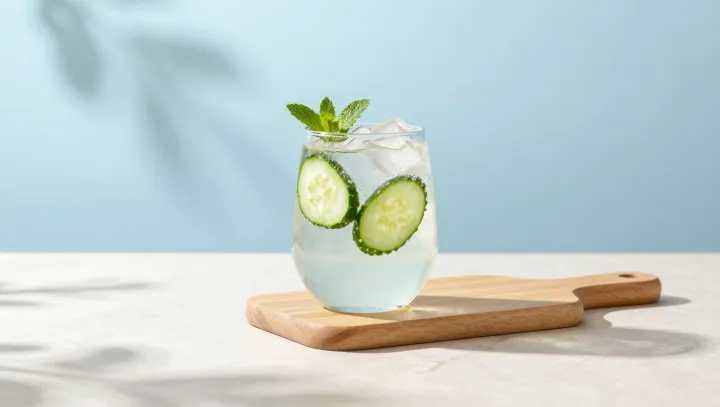
Cold glass, rising bubbles, a flash of mint in the air: the brain reads that trio as a reset button long before alcohol enters the story. What feels like sophistication is, at its core, a cleverly staged sequence of sensory cues that a sugar-free cucumber mint spritzer can execute with surprising precision.
The blunt truth is that refreshment is less about ethanol and sugar than about how thermoreceptors and mechanoreceptors fire in concert. Drop the liquid temperature and TRPM8 channels in the mouth and trigeminal nerve signal cool relief, a response that overlaps with the way the body flags thermal stress reduction. Add carbonation and those same trigeminal fibers register mild, controlled irritation as carbonic acid forms, a micro-jolt that the brain often tags as invigoration rather than pain at low concentrations.
Even more decisive is aroma. Volatile compounds from cucumber and mint rise with each bubble, hitting olfactory receptors and then the orbitofrontal cortex, a hub that integrates smell, taste, and context into a single judgment of value. Here, associative learning does the heavy lifting: pair these notes with ritual, glassware, and a pause in the day, and dopaminergic reward circuits light up in patterns not far removed from a craft cocktail, despite the absence of alcohol or sucrose. The drink is different; the neural shorthand for refresh is almost the same.