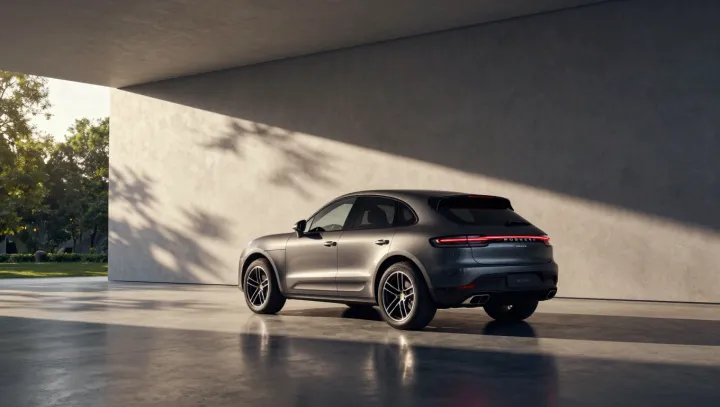
Brake rotors tell truths. Behind a large wheel, a larger disc and caliper add thermal capacity, while wider tires, stiffer springs, reinforced bushings, and chassis bracing raise unsprung mass or curb mass in return for grip, brake endurance, and tighter body control. The arithmetic is blunt. Each component answers a load that the standard package was permitted to leave alone.
Luxury is rarely light. Power seats, panoramic glass, acoustic laminated windows, insulation, premium speakers, and the wiring and control modules that serve them turn comfort into kilograms, even as buyers read the calmer cabin as evidence of class. The bill compounds quickly. Larger brakes demand wheel clearance; larger wheels invite larger tires; added tire grip can require suspension retuning and structural reinforcement, which in turn may call for more sound control to preserve NVH targets. Some packages add all-wheel-drive hardware, a transfer case, shafts, and a rear differential as well. Chain reaction, not ornament.
The contradiction is real. A compact SUV can feel faster because its steering response, brake fade resistance, and body motions improve, even if its power-to-weight ratio worsens and its acceleration gains little. Physics keeps receipts. Larger wheels may visually promise motion while their rotational inertia asks the powertrain to work harder during acceleration; adaptive dampers and torque-vectoring hardware can recover composure, not make mass disappear. The best versions spend weight where the driver can sense confidence. What gleams at the curb is a bargain between appetite and the quiet gravity of every added promise.