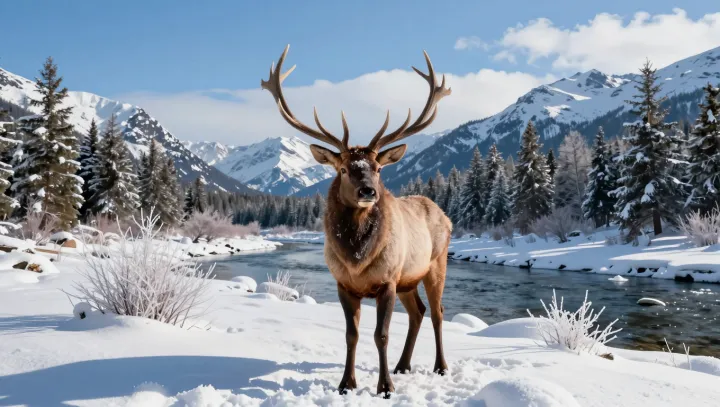
The paradox is imagined. Snowlight catches on an elk's back, and the animal can appear trapped inside winter when it is, in physiological terms, buffered from it. A hollow coat does not sedate the elk. It reduces the costly work of replacing heat lost to snow, wind, and cold air.
The coat is a heat-management device. Hollow guard hairs and dense underfur trap layers of still air, which slows conduction and convection before cold can draw much warmth from the skin. Air is the barrier. During piloerection, raised hairs can deepen that insulating layer, while the animal's large body mass also sheds heat more slowly than a smaller mammal would.
Alertness has a separate ledger. Neural vigilance, hearing, smell, vision, and rapid muscular response still demand fuel, yet efficient thermoregulation means less of that fuel must be burned simply to keep the core warm. The gain is indirect. Deep snow may restrict travel and obscure some sounds, but an elk can keep scanning, feeding, and reacting because its coat limits the winter tax on metabolism. Beneath that pale armor, attention remains awake.