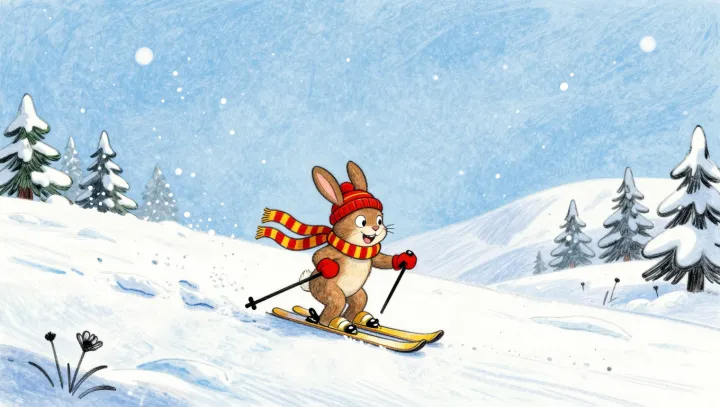
Powder makes the case. A skiing rabbit looks less absurd when its feet skim a white surface, because the eye already recognizes the wide, fringed prints of a snowshoe hare. Biology wrote the prop. The hare's oversized hind feet, packed with fur and built around a broad plantar surface, act as natural snowshoes rather than blades, distributing body mass across more snow. This is not magic.
The resemblance is mechanical. Snow support depends on ground pressure, the force spread over contact area; a broad, furred foot lowers that pressure while toe splay enlarges the platform under load, especially where fresh crystals collapse around a smaller track, reducing the work of climbing from deep impressions. No polished runners required. Skis are built to glide along a chosen line, whereas a snowshoe hare's feet favor flotation, traction, and rapid turns when crust breaks or powder shifts beneath it.
That distinction matters most. A convincing image need not copy equipment when it copies the visual logic behind equipment: breadth, lift, and a body held above yielding snow, with each bound leaving a print like a tiny landing pad. The trick is modest. What reads as a comic rabbit skier is, at closer range, an old winter bargain: fur, bone, and pressure meeting a surface that refuses to hold the narrow-footed.