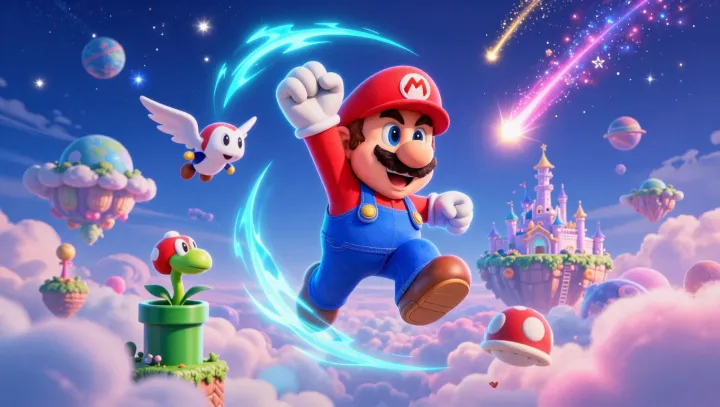
Mario's red cap did more than brand a hero. On low-resolution displays, where pixel quantization reduced a face to a handful of blocks, the cap formed a hard color boundary above the eyes; the overalls split torso from arms, so the sprite could remain legible while running, jumping, or turning. The result was instant.
That choice was sly engineering. In signal processing terms, red, blue, and skin-tone zones raised chromatic separation and luminance contrast, giving the eye stable regions to parse amid pixel noise. Think of them as packet headers in a damaged data stream: small, repeated markers that tell a receiver what it is seeing. Visual acuity and motion perception did the rest. Even a crude walking cycle read as a body in motion, not a trembling stack of squares.
The deeper trick was economy under pressure. Early game hardware had narrow pixel budgets and limited animation frames, which made every changing block expensive in both memory and recognition. Mario's cap erased the need to draw hair. His overalls gave moving arms an outline against his shirt. His mustache stabilized the face. As interfaces compress into smaller panes, that old sprite logic points toward a sharp possibility: identity can survive severe data loss when its signals are chosen, not piled on.