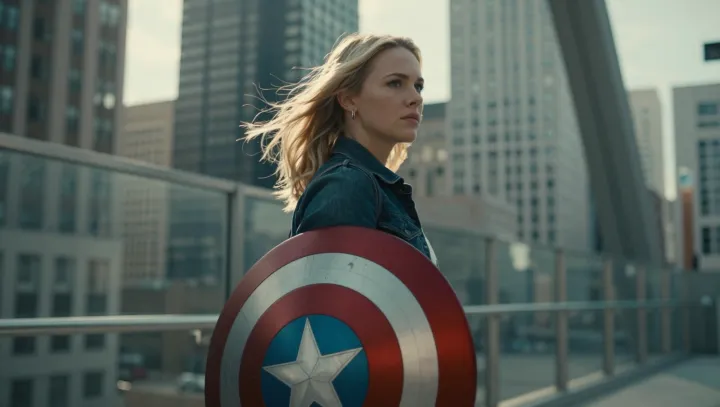
The shield is not neutral. When a new carrier raises its red, white, and blue disc, the object stops functioning as inherited hardware and starts asking whether public trust can survive a different body, voice, and set of scars. You feel that switch.
That discomfort is the game. Rogers can make the shield seem preapproved, but Wilson exposes its permission structure, because he carries the same national image while readers and viewers measure the gap between American ideals and the treatment of Black citizens. No metal fixes that. It also alters the burden of failure: a missed rescue or compromised choice can no longer be filed under one man's private flaw; it lands on the claim that anyone may represent the country. The prop becomes a stress test for legitimacy, not museum furniture for one hero.
That pressure gives it teeth. In comics and screen adaptations, a handoff turns continuity into an argument: is the shield a reward for obedience, a tool for dissent, or a contract that must be renegotiated whenever its bearer changes? You cannot dodge it. The object holds its shape, yet its meaning bends under biography, race, duty, grief, and the audience's appetite for uncomplicated patriotism. That friction is the franchise's best defense against nostalgia, which can turn a moral challenge into branded furniture. If you held it, whose faith would you risk?