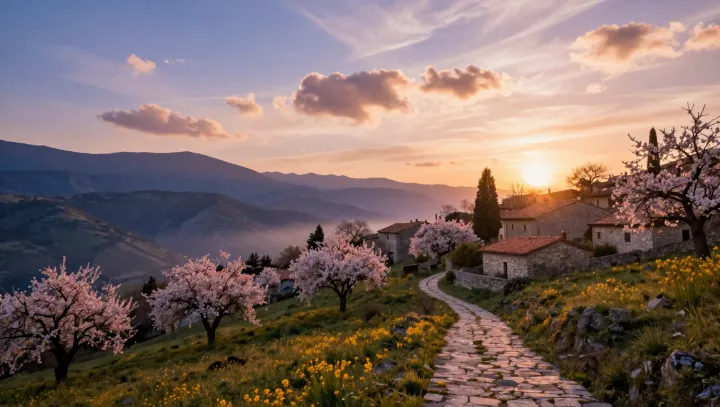
The path is not decoration. At sunset, low light catches the stone edges, and the village, perched above its stepped fields, seems less imposed on the slope than fastened to it, because the route gives roofs, walls, and ground one readable line. It changes the verdict. Its curve makes settlement appear answerable to grade.
Terraces deserve more credit than casual viewing usually grants them. By breaking a steep incline into near-level benches, they shorten slope length and interrupt overland flow; runoff loses velocity, sediment transport falls, and soil stays where roots can hold it. This is hydrology, plainly. Where terrace risers remain sound, water has more time for infiltration, while controlled outlets limit the gullying that can tear through an untreated hillside after heavy rain. The system works by patience. It trades sudden force for slower absorption and retained ground. That restraint also spreads moisture across cultivable surfaces rather than concentrating damage in the lowest channels.
But beauty is part of the engineering, not its cosmetic afterthought. The stone route acts as a visual datum, linking the compact village to the stepped ground without pretending that the slope was untouched. A place becomes legible. Its terraces record labor through contour alignment, drainage design, and repeated repair; its path turns those practical decisions into a public image, visible precisely when daylight thins. It offers no fantasy of wilderness; instead, it makes human alteration readable as care, constraint, and a continuing bargain with gravity. At dusk, utility and belonging share the same line.